What Is a Money Order? Your Complete Guide to Safe Payments
Have you ever needed a secure way to send cash without using a bank account? A money order offers a guaranteed, safe alternative to personal checks and cash. This reliable payment method protects your funds while giving you peace of mind. Discover exactly how a money order works, where to get one, and the best ways to use it for your financial needs.
How Does a Money Order Work?
A money order works like a prepaid check. You pay the face value upfront, plus a small fee, and the issuing institution guarantees the funds. Because the money is paid in advance, the recipient knows the payment will clear. This guarantees the funds unlike a personal check, which can bounce if the account lacks sufficient funds.
You can purchase these instruments with cash, a debit card, or sometimes a credit card. Once bought, you fill out the recipient’s name and your information. The recipient can then cash or deposit it at their bank or a local check-cashing location.
Money Order vs. Personal Check: Key Differences
Understanding the differences helps you choose the right payment method. Both serve unique purposes in personal finance.
- Funding Source: A check pulls money directly from your bank account. A money order requires you to pay the amount upfront.
- Security: Checks display your bank account number, creating fraud risks. Money orders keep your bank details completely private.
- Bounce Risk: Checks bounce when you lack funds. Money orders never bounce because the issuer holds the guaranteed cash.
- Acceptance: Landlords and businesses often prefer money orders from new clients due to the zero bounce risk.
Where Can You Buy a Money Order?
You have several convenient options for purchasing these secure documents. The United States Postal Service (USPS) remains the most common provider. You can also get them from Western Union and MoneyGram locations. Many major retailers like Walmart and CVS Pharmacy offer them at their customer service desks. Credit unions and local banks sell them to account holders, often at a lower cost.
How to Fill Out a Money Order Correctly
Filling out this document properly ensures the right person gets your funds. Follow these steps carefully:
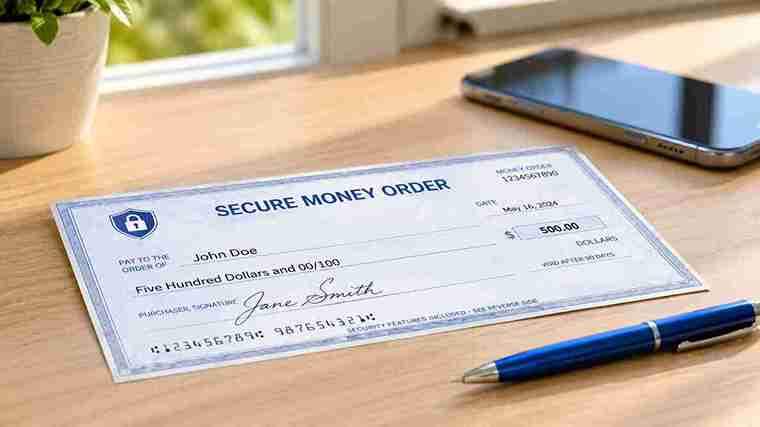
- Write the Recipient: Fill in the “Pay to the Order Of” line with the exact name of the person or business.
- Add Your Information: Write your full legal name and address in the purchaser section.
- Sign the Document: Sign the front bottom line where marked “Purchaser’s Signature.” Never sign the back.
- Keep the Receipt: Detach and keep the stub for your records. You need this stub if the document is lost or stolen.
Maximum Limits and Fees Explained
Most providers enforce strict limits to reduce fraud and money laundering risks. USPS limits their domestic money orders to $1,000. Western Union and MoneyGram also cap their standard orders at $1,000. If you need to send $2,500, you must buy multiple separate documents.
Fees remain highly affordable. USPS charges $2.00 for orders up to $500 and $2.50 for amounts between $500 and $1,000. Banks usually charge $5 to $10, while retailers like Walmart charge around $1.00 or less.
How to Cash a Money Order Safely
Cashing your document is a simple process if you follow the right steps. Take the signed document and a valid government-issued photo ID to your bank or credit union. If you lack a bank account, visit the issuing location. For example, you can cash a USPS money order at any post office. Grocery stores and check-cashing businesses will also cash them, but they charge higher fees.
What to Do If Your Money Order Is Lost or Stolen
Losing a payment document causes immediate stress, but you can recover your funds. Locate your receipt stub immediately, as it contains the official serial number. Contact the issuer right away—USPS, Western Union, or your bank. You will need to fill out a replacement form and pay a processing fee, usually around $15. The issuer will issue a replacement document or refund your money after investigating the claim.
Common Uses for a Money Order
People use these secure payments for several specific reasons. Landlords frequently request them for rent payments or security deposits. They work perfectly for large purchases from private sellers on platforms like Craigslist, where personal checks are too risky. Some government agencies require them for passport fees or court payments. They also serve as a reliable way to send money to inmates in prison.
International Money Orders: What You Need to Know
Sending funds overseas requires a specific international money order. USPS offers these, but they have a strict $700 limit. The recipient can cash them at post offices or banks in participating countries. Always verify that the destination country accepts this specific payment type before buying one, as restrictions vary by region.
Do Money Orders Expire?
Money orders do not have a strict expiration date, but they can lose value over time. Some issuers, like USPS, never charge a service fee for older documents. However, Western Union and MoneyGram start deducting monthly service fees after a set period, usually one to three years. These fees reduce the total value until the funds run out completely. Always cash or deposit them as quickly as possible.
Complete Comparison Table: Top Money Order Providers
| Provider | Maximum Limit | Fee (Up to $500) | Fee ($500-$1,000) | Best For |
|---|---|---|---|---|
| USPS | $1,000 | $2.00 | $2.50 | General use and international |
| Western Union | $1,000 | $1.50 | $2.00 | Quick availability globally |
| MoneyGram | $1,000 | $1.50 | $2.00 | Walmart locations |
| Walmart | $1,000 | $1.00 | $1.00 | Lowest cost domestic |
| Banks/Credit Unions | Varies | $5.00 | $10.00 | Existing account holders |
Frequently Asked Questions About Money Orders
What is a money order used for? A money order is used to make secure, guaranteed payments when cash or personal checks are not accepted. People use them to pay rent, buy items from strangers, or send money by mail.
Can I buy a money order with a credit card? Most places do not allow credit card purchases for a money order. You must typically use cash or a debit card. Using a credit card is treated as a cash advance, which triggers high fees and immediate interest charges.
Is a money order safer than cash? Yes, a money order is much safer than sending cash through the mail. If cash is lost, it is gone forever. If a money order is lost, you can use the receipt stub to track it, cancel it, and get your money back.
Who signs the back of a money order? The recipient signs the back of the money order to endorse it for deposit or cashing. As the purchaser, you only sign the front. Never sign the back when you buy it.
Can I cash a money order without a bank account? You can easily cash a money order without a bank account. Take it to the issuing location, such as a post office for USPS documents, or visit a local check-cashing store. You must present a valid photo ID to receive the cash.
How long does it take for a money order to clear? A money order usually clears within one to two business days when deposited into a bank account. Because the funds are guaranteed upfront, banks often make a portion of the money available immediately.
Secure Your Payments With Confidence
Using a money order protects your hard-earned cash while guaranteeing the recipient receives their funds. This reliable payment method eliminates the risk of bounced checks and keeps your bank account details completely private. Take control of your financial transactions today by choosing this safe, affordable option for your next large purchase or remote payment. Share this guide with a friend who needs a safer way to send money!
Trust Signals & Sources: Author: Financial Payment Strategies Expert Primary Sources: United States Postal Service (USPS) Money Order Guidelines, Western Union Payment Security Standards, MoneyGram Consumer Protection Policies, Federal Trade Commission (FTC) Payment Scam Prevention Guidelines, Consumer Financial Protection Bureau (CFPB) Payment Methods Educational Resources.