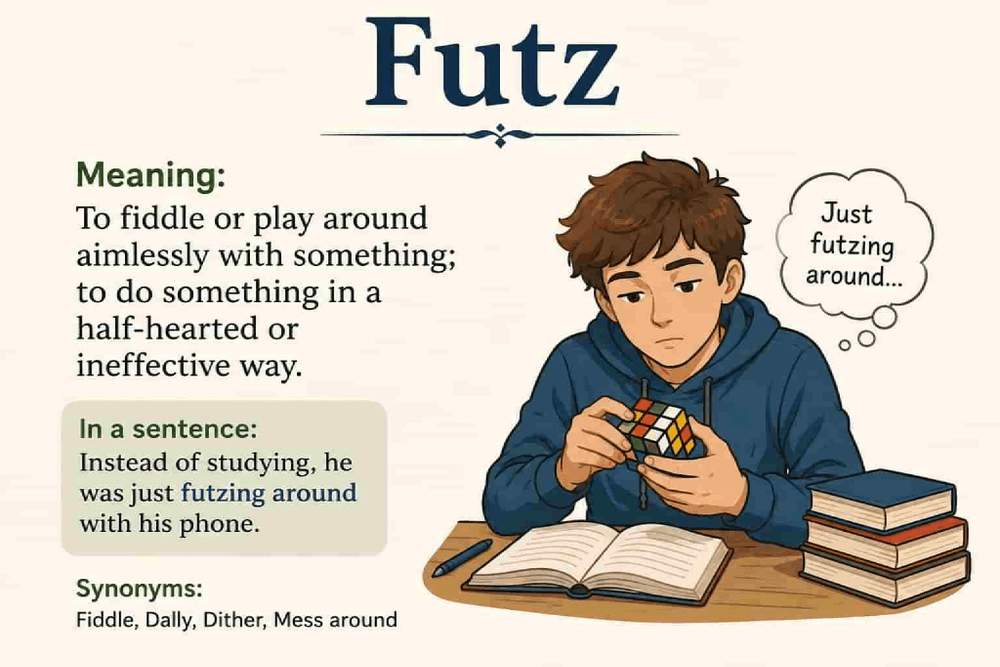
Futz Meaning: A Clear Guide to This Playful Word’s Definition and Daily Use
Introduction
You hear someone say, “Futz Meaning around.” The meaning hovers just out of reach. You smile and nod, but inside, the word puzzles you.
That tiny moment of confusion eats at clear communication.
Futz is one of those sneaky, informal words native speakers toss around without thinking. It sounds funny. It feels right. But what does futz actually mean, and why should you care? This guide unpacks the complete futz meaning — its definition, history, correct usage, common phrases, and the subtle shades that make it a surprisingly useful word. You will walk away knowing exactly how to use futz with confidence.
What Is the Futz Meaning?
The futz meaning centers on wasting time or fiddling with something in an aimless, unproductive way. When someone futzes, they busy themselves with small, unimportant tasks while avoiding real work. The word also describes tinkering with an object without a clear plan — adjusting, poking, and messing with something that may not need fixing.
Merriam-Webster defines futz simply as “to spend time in a relaxed or lazy way.” The Oxford English Dictionary traces it to early 20th-century American slang, likely a playful alteration of the Yiddish word “arumfartsn,” which roughly means “farting around.” That origin explains the word’s comedic undertone.
Three core meanings emerge from everyday usage:
- Wasting time: “I futzed all morning instead of writing my report.”
- Fiddling with something: “He keeps futzing with the thermostat.”
- Ineffective tinkering: “Stop futzing with the code — it worked fine before.”
The word carries zero positive intent. Futzing implies a lack of focus, purpose, or productive outcome. People use it to gently criticize themselves or others without harsh judgment.
Where Did Futz Come From? A Quick History
Futz entered American English in the early 1930s. Linguists at Merriam-Webster documented its first written appearance in 1932, though spoken usage likely predates that record by several years.
The word evolved from Yiddish-speaking immigrant communities in New York City. The original Yiddish phrase “arumfartsn” combined “arum” (around) and “fartsn” (to fart), creating a vivid image of someone moving in circles while accomplishing nothing. English speakers shortened and softened the crude original into the snappier “futz.”
By the 1950s, futz appeared regularly in print media, popular fiction, and casual conversation across the United States. The word never fully crossed into formal English — you will not find it in legal documents or academic papers — but it established a permanent place in informal American speech.
Notable appearances include Philip Roth’s novels, multiple episodes of The Simpsons, and dialogue in the film Office Space, where characters futz with office equipment to comic effect.
How Do You Pronounce Futz Correctly?
Futz rhymes with “butts” and “guts.” It uses a short “u” sound, identical to the vowel in “cup” or “fun.”
- Phonetic spelling: /fəts/
- One syllable: futz
Common mispronunciations include rhyming it with “boots” (f-oots) or pronouncing it with two syllables (fut-tiz). Both are incorrect. The word is short, sharp, and ends with a crisp “ts” sound.
Common Phrases That Use Futz
Understanding individual phrases deepens your grasp of futz meaning beyond a dictionary definition. Here are the expressions you will encounter most often.
Futz Around
“Futz around” means wasting time without any productive goal. A student futzes around by scrolling social media instead of studying. A worker futzes around by reorganizing desk drawers to avoid a difficult phone call.
The phrase often carries mild self-awareness. Someone who says, “I’ve been futzing around all day,” admits they accomplished nothing and feels slightly guilty about it.
Futz With
“Futz with” describes messing with an object, system, or situation — typically with poor results. A homeowner futzes with a leaky faucet and makes the drip worse. A manager futzes with a working schedule and confuses the entire team.
This phrase implies the person should probably leave things alone. The tinkering rarely helps.
Futz Away
“Futz away” specifically pairs with time. Someone futzes away an afternoon, a weekend, or an entire vacation. The phrase emphasizes the irretrievable loss of hours that could have gone toward something meaningful.
Futz vs. Similar Words: What’s the Difference?
English contains several words that overlap with futz but carry distinct shades of meaning. Here is a clear breakdown.
| Word | Meaning | Intensity | Negative Tone | Example |
| Futz | Aimless fiddling or time-wasting | Mild | Light | “I futzed with my camera settings.” |
| Fiddle | Nervous or idle hand movement | Mild | Neutral | “She fiddled with her necklace.” |
| Tinker | Experimental adjustment | Moderate | Neutral to positive | “He tinkered with the engine until it purred.” |
| Dawdle | Slow, deliberate delay | Mild | Mildly negative | “The kids dawdled on the way to school.” |
| Procrastinate | Intentional delay of important tasks | High | Strongly negative | “She procrastinated on her taxes until April 14th.” |
| Lollygag | Foolish or playful time-wasting | Mild | Playfully negative | “Stop lollygagging and get in the car.” |
Futz sits closest to fiddle and lollygag. Unlike procrastinate, which implies anxiety and avoidance of something important, futz often describes trivial, almost unconscious behavior. Unlike tinker, which can lead to genuine improvement, futzing almost never produces good results.
Real-Life Examples of Futz in Sentences
Examples solidify meaning. Here are practical sentences showing natural usage across different contexts.
At work:
- “The meeting achieved nothing because everyone futzed with the slides instead of addressing the actual problem.”
- “I futzed away my most productive hours answering emails that did not matter.”
At home:
- “Dad spent Saturday futzing with the garage door opener. It now works worse than before.”
- “Without ever planting anything new, my partner fiddles around in the garden.”
In technology:
- “The developer futzed with the user interface for weeks. The original version was cleaner.”
- “Stop futzing with your phone settings. The battery drains faster every time you adjust something.”
In creative work:
- “Instead of finishing the first draft, writers frequently futz with their first paragraph.”
- “The designer futzed with font choices for three hours. The client approved the first option immediately.”
Is Futz Offensive or Just Informal?
Futz is completely inoffensive. It contains no vulgarity, no slur, and no taboo associations. The word’s distant connection to a Yiddish term for flatulence does not register with modern speakers — most have no idea about that origin.
The informality, however, limits its use. Futzing sounds natural in conversation, casual emails, blog posts, and fiction dialogue. It sounds strange in:
- Academic papers
- Business proposals
- Legal documents
- Medical reports
- Formal speeches
Among friends and family, futz carries a gentle, teasing quality. Calling someone a futzer (one who futzes) pokes fun without real bite. The word softens criticism that harsher alternatives like “slacker” or “procrastinator” would sharpen.
The Psychology Behind Futzing
Why do people futz? The behavior connects to several well-documented psychological patterns.
Task avoidance with plausible deniability. Futzing lets a person feel busy while dodging something harder. Fiddling with email filters feels productive even when a major project sits untouched. The futzer gets to claim they were “working on something.”
Low-stakes control seeking. When bigger life areas feel chaotic, futzing with small things — desk arrangement, app settings, playlist order — provides a tiny hit of perceived control. The behavior soothes anxiety temporarily without solving the underlying stressor.
Perfectionism camouflage. Some Futz Meaning people futz endlessly with minor details because finishing a project means facing judgment. The futzing serves as an unconscious shield against potential criticism.
Cognitive fatigue response. After intense mental work, the brain craves low-effort activity. Futzing fills that gap. The drained mind pokes at trivial things because it lacks energy for deep focus.
Psychologists at the University of California, Irvine, studied workplace time use and found that knowledge workers average only three hours of genuine productivity per day. The remaining hours fill with futzing — unnecessary email checking, tool reconfiguration, and status meeting busywork.
How to Stop Futzing and Reclaim Your Time
Recognizing futzing is the first step. Stopping it requires practical strategies.
Name the behavior. When you catch yourself adjusting something unimportant, say it aloud or write it down: “I am futzing right now.” The simple act of labeling interrupts the automatic loop.
Set a five-minute rule. Allow yourself five minutes to futz, then stop. Set a timer. When it rings, pivot to the task you were avoiding. This acknowledges the urge without surrendering the entire day.
Identify the real block. Ask what task the futzing helps you avoid. Naming the avoided task reduces its power. Often the thing you dodge is not as bad as your brain insists.
Create friction for futzing triggers. If you futz with your phone, place it in another room. If you futz with email, close the tab. If you futz with design details, switch to a plain text editor where formatting options disappear.
Use structured work intervals. The Pomodoro Technique (25 minutes of focused work, 5-minute break) leaves less mental space for futzing. The ticking timer creates gentle accountability.
Reward genuine completion. When you finish a real task without futzing first, acknowledge it. A small positive reinforcement — a walk, a coffee, a checkmark on a list — trains your brain to prefer completion over fiddling.
Futz in Pop Culture and Media
Futz appears regularly across American entertainment, reinforcing its place in everyday language.
Television: The Simpsons uses futz multiple times across its long run. Homer Simpson futzes with everything from nuclear control panels to barbecue grills, always with predictably bad outcomes.
Film: The 1999 cult classic Office Space captures futzing as workplace pathology. Characters spend endless hours futzing with TPS report cover sheets and malfunctioning printers, satirizing corporate busywork.
Literature: Philip Roth scattered futz through his novels depicting mid-20th-century American life. His characters futz with relationships, careers, and personal obsessions in ways that define the word perfectly.
Music: Indie band Futz played briefly in the Brooklyn scene during the early 2000s, choosing the name for its playful, self-deprecating quality.
Why Futz Deserves a Spot in Your Vocabulary
Futz fills a gap that more formal words leave open. It describes a specific, recognizable behavior with warmth and humor. Calling yourself a futzer invites a knowing laugh. Pointing out someone else’s futzing softens what could sound like nagging.
The word also sharpens self-awareness. Once you know the futz meaning, you start noticing the behavior in yourself. That awareness often proves to be the first step toward choosing more deliberate, meaningful actions.
Language constantly evolves. Futz survived nearly a century because it names a universal human tendency — the drift toward trivial fiddling when meaningful work beckons. That tension will never disappear, and neither will the word that captures it so neatly.
Frequently Asked Questions About Futz Meaning
What does futz mean in simple terms?
Futz means wasting time or fiddling with something in an unproductive, aimless way. If you are adjusting small details while avoiding important work, you are futzing. The word is informal and carries a light, mildly critical tone.
Is futz a real word or just slang?
Futz is a real word recognized by major dictionaries including Merriam-Webster and the Oxford English Dictionary. It falls into the category of informal American English. You will find it in dictionaries but not typically in formal writing like academic papers or legal documents.
Where did the word futz originate?
Futz originated in early 1930s America, derived from the Yiddish expression “arumfartsn,” meaning “to fart around.” Jewish immigrant communities in New York City introduced the term into English. Over time, speakers shortened and softened it into the modern “futz.”
Can I use futz in professional settings?
Use caution with futz in professional settings. It fits naturally in casual workplace conversation, team chats, and informal emails. Avoid it in client presentations, formal reports, job interviews, and any written communication meant for external audiences. When in doubt, choose “waste time” or “fiddle with” as safer alternatives.
What is the difference between futzing and procrastinating?
Procrastinating involves deliberately delaying important tasks, often with anxiety or guilt attached. Futzing involves aimless fiddling with small, trivial things — sometimes as a form of procrastination, but sometimes simply because the person lacks direction or energy. Procrastination feels heavy; futzing feels light and scattered.
Does futz have a negative meaning?
Futz carries a mildly negative meaning, but the criticism stays gentle. Calling someone a futzer pokes light fun rather than expressing real anger. The word implies inefficiency and distraction, not malice or laziness. Most people use it about themselves with a tone of amused frustration.
Bringing Futz Into Your Daily Language
Words stick when you use them. Start small. The next time you catch yourself adjusting something that does not need adjusting, say “I’m futzing” out loud. Notice how the word fits the moment.
Share the futz meaning with someone who would appreciate a playful addition to their vocabulary. Language connects people, and words with character — words like futz — make conversation more colorful and honest.
The English language offers thousands of ways to say someone wasted time. Futz does it with a grin. That is worth keeping around.