Semicolon Tattoo Meaning: Hope & Survival
Introduction
You see a small punctuation mark on someone’s wrist. You might think it is just a grammatical choice. The reality is far deeper. The semicolon tattoo meaning represents a life choice. It declares that a person’s story is not over. This single piece of ink interrupts despair and starts a conversation about resilience. Understanding this symbol could save a life.
What Is the Exact semicolon tattoo meaning?
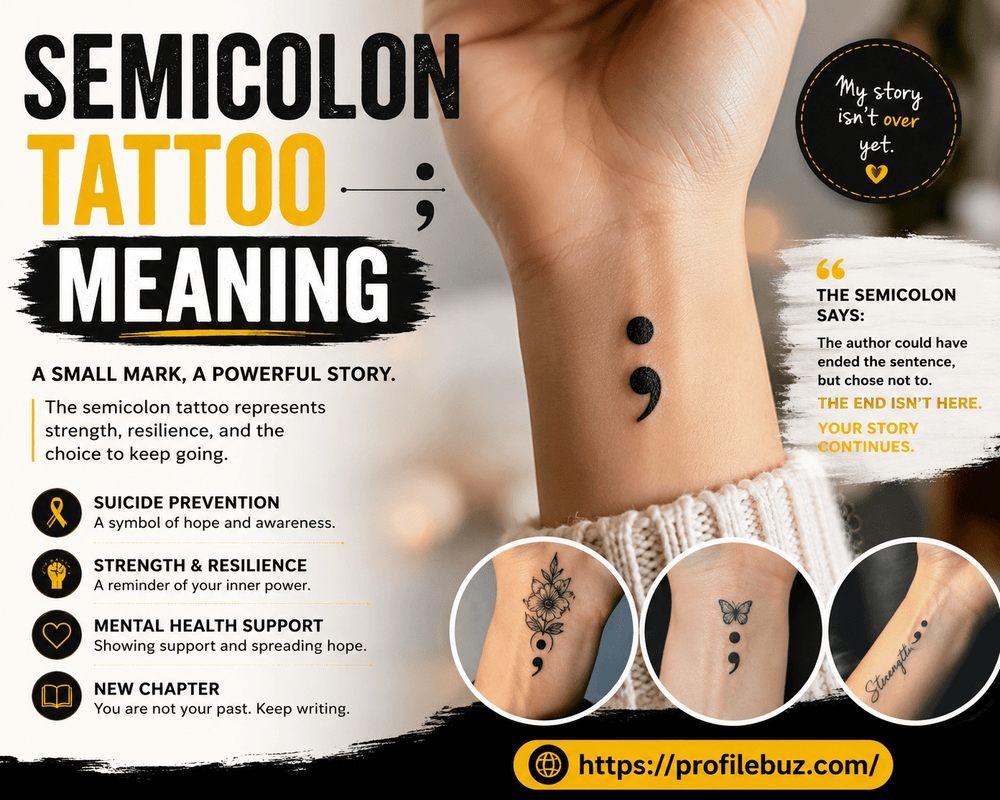
The exact semicolon tattoo meaning comes from grammar. An author uses a semicolon to pause a sentence instead of ending it. In human terms, your life is the sentence. Depression, anxiety, or loss represents the potential period. Choosing the semicolon means you refused to let the pain write your final chapter. You decided to keep going.
How Did Project Semicolon Start the Movement?
Amy Bleuel founded Project Semicolon in 2013 after losing her father to suicide. She wanted a visual symbol of hope. The semicolon tattoo meaning grew from her personal tragedy into a global mission. People began inking the symbol to show solidarity. Today, the movement funds mental health resources and reminds millions that their story matters to someone.
External Source 1: Project Semicolon Official Website (History Section)
External Source 2: American Foundation for Suicide Prevention (Symbol Recognition)
Why Choose a Semicolon Over Other Mental Health Tattoos?
Other symbols exist, like the green ribbon or the # ; itself stands alone. A green ribbon requires explanation. A semicolon is subtle yet instantly recognizable within support communities. The semicolon tattoo meaning offers privacy. You can hide it on your ankle or display it on your wrist. Unlike a sad face or a broken heart, this punctuation projects quiet strength and deliberate survival.
Who Should Get This Tattoo?
- Survivors: Anyone who has battled suicidal thoughts.
- Supporters: A parent, friend, or partner of someone struggling.
- Warriors: Individuals living with chronic depression, bipolar disorder, or PTSD.
- Remembrance: Those who lost someone to suicide and continue the fight for them.
The semicolon tattoo meaning fits anyone who understands the weight of a second chance. You do not need a diagnosis to wear this symbol. Empathy qualifies you.
Where Is the Best Placement for a Semicolon Tattoo?
Placement changes the message slightly.
- Wrist (Most Common): Visible to the wearer as a daily reminder.
- Behind the Ear: Subtle; for personal strength rather than public display.
- Finger: Small, delicate, and always in sight when you type or wave.
- Ribcage: Private; close to the heart.
- Inner Ankle: Easy to cover; represents a quiet journey.
The semicolon tattoo meaning remains constant, but a wrist tattoo says “I am an open book,” while a rib tattoo says “This is mine alone.”
Can You Combine the Semicolon with Other Designs?
Yes. Most people combine the semicolon to enhance its story.
- Bird: Represents freedom from mental captivity.
- Heartbeat line: Medical survival and emotional endurance.
- Flowers (Lotus/Rose): Rebirth from muddy struggles.
- Moon phases: Acknowledging that darkness is temporary.
- Butterfly: Transformation and emergence from a cocoon of pain.
Adding art does not change the core semicolon tattoo meaning. It adds layers. A semicolon inside a butterfly says your survival led to beauty.
External Source 3: National Institute of Mental Health (Tattoo Therapy Studies)
What Does a Semicolon Tattoo Mean in Different Cultures?
Western culture strongly associates it with Project Semicolon. However, in literary circles, it represents an unfinished thought. In some Asian communities, small punctuation tattoos are gaining traction as “saving marks.” The semicolon tattoo meaning universally translates to “to be continued.” No culture sees it as negative. It always implies a narrative that is still alive.
Does Color Change the semicolon tattoo meaning?
Black is standard and stark. It represents the seriousness of the struggle.
- Red: Courage and the blood of life.
- Blue: Calm and anti-bullying.
- Gold: Childhood cancer awareness or loss of a child.
- Watercolor splashes: Embracing chaos and turning it into art.
If you choose rainbow colors, the semicolon tattoo meaning expands to include LGBTQ+ mental health struggles. The punctuation remains the anchor; the color adds your specific cause.
How to Explain Your Tattoo to Someone Who Asks?
Be prepared for questions. Use active voice and honesty.
“I chose this because my story isn’t finished.”
“It means I survived a very dark time.”
“This is a reminder that a pause is not a period.”
You do not owe anyone your medical history. A simple answer like “It represents hope for the broken” carries the semicolon tattoo meaning perfectly without oversharing.
Is the Semicolon Tattoo Still Relevant in 2026?
Yes. Mental health awareness is stronger now than in 2013. The CDC reports that suicide rates remain a top concern. Therefore, the semicolon tattoo meaning is not a trend. It is a permanent fixture in body art culture. New generations discover Project Semicolon every day. As long as people struggle in silence, this tiny punctuation mark will speak loudly.
What Are the Risks of Getting This Tattoo?
- Scarring: If you cover old scars, ensure the artist is experienced.
- Infection: Always use a licensed parlor.
- Judgment: Some employers still question visible tattoos.
- Emotional trigger: Seeing the ink daily forces you to relive trauma.
The semicolon tattoo meaning is powerful, but ensure you are mentally ready. A tattoo is permanent. If you are currently in crisis, wait until you are stable. Use a marker to draw it on first.
How Do You Support Someone with This Tattoo?
Do not stare. Do not ask “Did you try to kill yourself?” Instead, say:
- “I see your symbol. I am glad you are here.”
- “That is a powerful choice.”
- “If you ever need to talk, I am free.”
Respecting the semicolon tattoo meaning means respecting boundaries. You do not need to fix them. Just acknowledge their presence without pressure.
Frequently Asked Questions (FAQs)
Q1: Does a semicolon tattoo always mean suicide survival?
A: No. While this is the most common semicolon tattoo meaning, some people get it for grammatical passion or as a tribute to a writer. However, 90% of wearers associate it with Project Semicolon and mental health.
Q2: Can I get a semicolon tattoo if I have never been suicidal?
A: Yes. You can get it in solidarity with a loved one. The semicolon tattoo meaning also represents pausing a busy life or choosing to change careers. But be mindful not to appropriate the trauma aspect if you have not lived it.
Q3: How much does a small semicolon tattoo cost?
A: Most shops charge a minimum fee of 50to100. The semicolon tattoo meaning does not require a large design. Small sizes are cheap and quick, often taking only 15 minutes.
Q4: Does it hurt more on the wrist or behind the ear?
A: Behind the ear hurts less for most people due to thin skin but fewer nerve endings. The wrist can sting because bones lie close to the surface. The semicolon tattoo meaning remains the same regardless of pain level.
Q5: Is there a wrong way to draw a semicolon?
A: Yes. The dot must sit below the comma part. A badly drawn semicolon looks like a colon or a smear. Ensure your artist understands the semicolon tattoo meaning so they treat it with respect, not just as a quick punctuation mark.
Q6: Can I remove it later?
A: Laser removal works. However, removing a symbol of survival sends a complicated message. Think carefully. The semicolon tattoo meaning is about permanence of choice. If your mental health improves, consider keeping it as a history lesson.
Conclusion: Your Story Is a Sentence Without an End
The semicolon tattoo meaning boils down to one powerful verb: continue. You do not need a perfect life to wear it. You do not need a dramatic story. You just need the will to see tomorrow. If you are considering this ink, take a photo of your bare skin first. Sit with the idea for 30 days. Then, if the symbol still calls to you, find a reputable artist. Wear your pause proudly. Your sentence is still being written, and that is the most beautiful thing about being human.