what is latency vs bandwidth? The 2026 Guide to Real Internet Speed
PAS Formula Intro
You pay for high-speed internet, but videos still buffer and games freeze. The problem is not always your plan. Most people confuse two different things. What is latency vs bandwidth is the single most important question for fixing slow internet. Bandwidth moves data. Latency delays it. Learning this difference saves you money and frustration.
1. The Simple Definition: Bandwidth is the Pipe, Latency is the Traffic
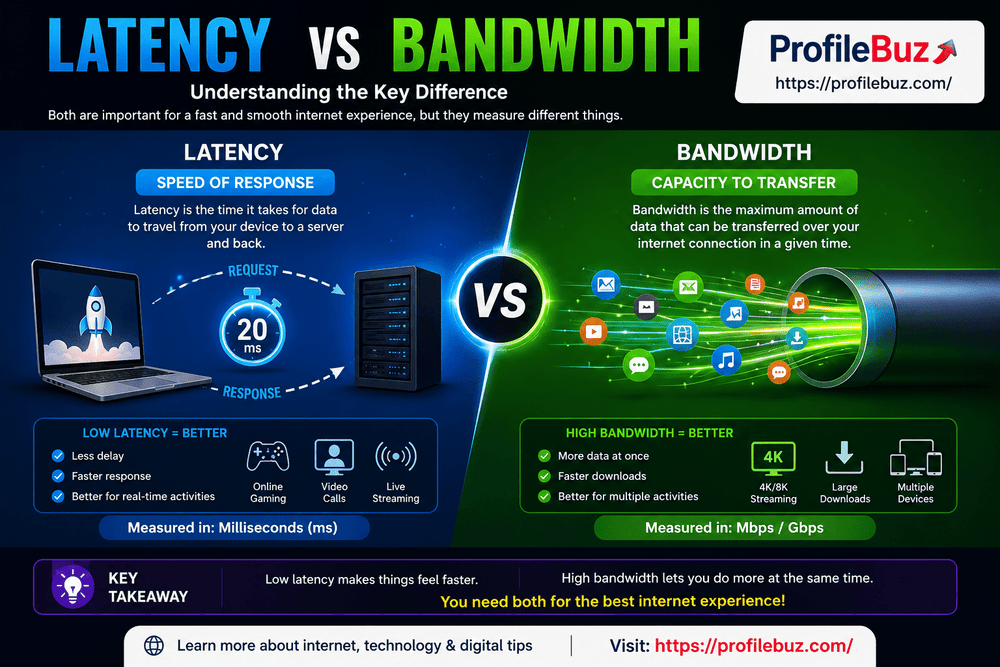
Bandwidth measures how much data can move per second. Think of a water pipe. A wide pipe carries more water. A narrow pipe carries less.
Latency measures the time it takes for one piece of data to travel from point A to point B. Think of a single car on a highway. Even on a wide road, the car takes time to reach the destination.
To answer what is latency vs bandwidth directly: Bandwidth is volume. Latency is speed.
2. Why Most Internet Slowdowns Are Not What You Think
You call your provider about bad speeds. They sell you a bigger plan. Nothing changes. This happens every day.
The truth is high bandwidth fixes downloads. High latency ruins everything else. Video calls, gaming, and web browsing need low latency. Streaming 4K movies needs high bandwidth.
Understanding what is latency vs bandwidth stops you from wasting money on the wrong upgrade.
3. Bandwidth Explained: How Much Data Can Move at Once
Internet providers advertise 100 Mbps, 500 Mbps, or 1 Gbps. Those numbers are bandwidth.
- Low bandwidth (10 Mbps): One device works. Two devices buffer.
- Medium bandwidth (100 Mbps): Four people can stream Netflix.
- High bandwidth (1 Gbps): Ten devices download games simultaneously.
Bandwidth feels like a highway. More lanes move more cars. Your family’s devices are the cars. When lanes fill up, traffic stops.
4. Latency Explained: The Hidden Killer of Real-Time Apps
Latency is measured in milliseconds (ms). You do not see latency on your internet bill. But you feel it.
- Excellent latency (1–20 ms): Gaming feels instant. Calls feel real.
- Average latency (20–50 ms): Fine for browsing. Bad for shooters.
- High latency (100+ ms): Clicks feel delayed. Voices cut out.
Satellite internet suffers high latency (600 ms). Fiber internet wins low latency (10 ms). When asking what is latency vs bandwidth, remember latency is reaction time. Bandwidth is carrying capacity.
5. The Video Call Test: Which One Hurts More?
Open Zoom or Teams. Two problems appear.
Low bandwidth: The video looks blurry. Pixels break apart. Sound continues fine.
High latency: The video looks clear. But people talk over each other. There is a two-second delay. You say hello. They answer three seconds later.
Low bandwidth ruins picture quality. High latency ruins conversation flow. This real test proves what is latency vs bandwidth affects daily work.
6. The Gaming Nightmare: Why 500 Mbps Still Lags
You buy a 500 Mbps plan. You play Call of Duty. Every match lags. Your ping shows 150 ms.
Here is the hard truth. Gaming uses only 3–5 Mbps of bandwidth. Your 500 Mbps plan wastes 495 Mbps. The real enemy is high latency.
Professional gamers pay for low latency (under 20 ms). They do not need 1 Gbps. Understanding what is latency vs bandwidth saves you from buying the wrong gaming internet.
7. Downloading a File: Bandwidth Wins This Race
Download a 50 GB game on Steam. Bandwidth is king here.
- 100 Mbps connection: 1 hour 10 minutes
- 500 Mbps connection: 13 minutes
- 1 Gbps connection: 7 minutes
Latency does not matter for downloads. A 200 ms ping still finishes the file. But the file takes the same time regardless of latency.
So what is latency vs bandwidth for downloads? Bandwidth is everything. Latency is nothing.
8. The Science of Ping: How Data Travels
Your data travels through cables, routers, and servers. Each hop adds milliseconds. Distance creates latency.
New York to Los Angeles: 50 ms minimum (light speed limits). New York to London: 75 ms. New York to Australia: 200 ms.
No internet plan beats physics. A faster plan does not shorten distance. When you ask what is latency vs bandwidth, understand that bandwidth depends on your provider. Latency depends on physics and routing.
9. Jitter and Packet Loss: The Two Hidden Brothers
Latency and bandwidth get all attention. But jitter and packet loss destroy connections.
Jitter is changing latency. One second your ping is 20 ms. Next second it jumps to 100 ms. This causes stuttering.
Packet loss happens when data never arrives. Voice cuts out completely. Your character stops moving.
Low jitter (under 5 ms) matters more than low bandwidth for calls. Packet loss above 1 percent breaks everything.
10. How to Test Your Own Connection (Do This Now)
Open your browser. Go to Speedtest or Cloudflare. Run three tests at different times.
Write down three numbers:
- Download bandwidth (Mbps)
- Latency / Ping (ms)
- Jitter (ms)
Compare to your plan. If bandwidth matches but latency stays high (over 80 ms), buying more bandwidth will not help. You need a different provider or wired connection.
Knowing what is latency vs bandwidth changes how you read these test results. Most people see low bandwidth and upgrade. Smart people see high latency and switch technologies.
11. Fixing High Latency: Five Things That Actually Work
You do not need a new plan to fix latency. Try these first.
- Use Ethernet cable: Wi-Fi adds 10–50 ms of extra latency.
- Close background apps: Zoom, Dropbox, and updates steal processing time.
- Change DNS server: Cloudflare (1.1.1.1) often routes faster than your ISP.
- Reboot your router: Cache buildup adds hidden delays.
- Avoid VPNs: VPNs reroute traffic, adding 20–100 ms.
These steps fix high latency without increasing bandwidth. That is the power of understanding what is latency vs bandwidth.
12. Fixing Low Bandwidth: When to Upgrade Your Plan
Low bandwidth needs a real upgrade. You cannot trick physics.
Signs you need more bandwidth:
- Video quality drops to 240p automatically
- Family members say “the internet is slow” every night
- Downloads take hours instead of minutes
- Speed tests show 25 Mbps or less
Upgrade your plan only when bandwidth tests fail. Test latency first. Many people upgrade for a latency problem and remain frustrated.
13. The Complete Comparison Table
| Feature | Bandwidth | Latency |
|---|---|---|
| What it measures | Volume of data per second | Time for one trip |
| Units | Mbps, Gbps | Milliseconds (ms) |
| Feels like | Highway width | Speed limit |
| Hurts when | Many devices stream | Gaming or calls |
| Fix with | Bigger internet plan | Ethernet or better routing |
| Not affected by | Distance to server | Number of devices |
| Example problem | Buffering 4K video | Voice delay on Zoom |
| Your bill shows | Yes (promised speed) | No (hidden) |
This table answers what is latency vs bandwidth visually. Bookmark it for future reference.
14. Real-World Examples: Four Everyday Scenarios
Scenario A: Working from home
You need low latency (under 50 ms) for clear calls. You need 50–100 Mbps bandwidth for stable video. Latency matters more.
Scenario B: 4K streaming on one TV
You need 25 Mbps bandwidth. Latency does not matter at all. A 200 ms ping still plays Netflix perfectly.
Scenario C: Competitive gaming
You need under 30 ms latency. You only need 10 Mbps bandwidth. Bandwidth is almost irrelevant here.
Scenario D: Large file uploads to cloud
You need high bandwidth (200+ Mbps). Latency only adds a few seconds per file. Bandwidth wins completely.
15. Why Your ISP Hides Latency Numbers
Internet providers advertise “up to 1 Gbps.” They never show latency numbers. There is a reason.
Bandwidth is easy to improve. Add more cables. Upgrade hardware. Put a big number on an ad.
Latency is hard to fix. It requires better routing, fewer hops, and physical proximity. Providers do not control distance. So they hide latency.
When you finally understand what is latency vs bandwidth, you see through marketing. The big number on the bill does not guarantee a fast feeling.
16. The Future: Low Earth Orbit vs Fiber
Starlink and similar satellites fly very low (550 km). Old satellites sat at 35,000 km.
- Old satellite latency: 600+ ms (unusable for gaming)
- Starlink latency: 25–40 ms (good for most games)
- Fiber latency: 1–10 ms (best for professionals)
Fiber remains the champion. But Starlink beats old broadband for rural users. Understanding what is latency vs bandwidth helps you choose technology, not just speed numbers.
17. Five Myths That Need to Die
Myth 1: “More bandwidth always feels faster.”
Truth: High latency makes any bandwidth feel slow.
Myth 2: “Gaming needs 500 Mbps.”
Truth: Gaming needs 10 Mbps and low latency.
Myth 3: “Wi-Fi 6 fixed latency.”
Truth: Wi-Fi adds 10–30 ms over Ethernet always.
Myth 4: “Speed tests show real latency.”
Truth: Speed tests pick the nearest server. Real internet uses far servers.
Myth 5: “Fiber just increases bandwidth.”
Truth: Fiber dramatically lowers latency. That is its secret weapon.
18. A Simple Decision Tree for You
Ask yourself three questions.
Question 1: Do video calls have delays or talking over people?
- Yes → Fix latency. Use Ethernet. Change DNS.
Question 2: Do videos look blurry or take forever to start?
- Yes → Fix bandwidth. Upgrade your plan. Limit devices.
Question 3: Do games freeze or feel “heavy”?
- Yes → Fix latency. Get fiber if possible. Wired connection only.
This decision tree uses what is latency vs bandwidth to save you time and money.
Frequently Asked Questions (FAQs)
Q1: What is latency vs bandwidth in one sentence?
Bandwidth is how much data fits through the pipe. Latency is how fast one piece of data travels.
Q2: Which one matters more for Zoom calls?
Latency matters more. High bandwidth only fixes blurry video. High latency ruins conversation timing.
Q3: Can I have low latency but low bandwidth?
Yes. A 10 Mbps fiber connection gives 5 ms latency but slow downloads. This works fine for gaming.
Q4: Does a VPN increase latency?
Yes. VPNs add 20–100 ms of latency by rerouting your traffic through extra servers.
Q5: Why does my latency spike at night?
Network congestion on your ISP’s backbone. Everyone in your area uses the internet, creating jitter.
Q6: How do I explain what is latency vs bandwidth to my family?
Bandwidth is how many cars fit on a bridge. Latency is how fast one car crosses it.
Strong Conclusion: Stop Buying the Wrong Fix
You now understand the real difference. Bandwidth handles volume. Latency handles speed. Most people waste money on high bandwidth plans when their real problem is high latency.
Take action today. Run a latency test right now. If your ping is over 80 ms, do not buy a new plan. Use an Ethernet cable. Switch your DNS. Call your provider to ask about fiber.