Skink Meaning: Definition, Traits & Ecological Role
You spot a flash of smooth, polished scales disappearing under a rock. Your brain instantly fires a question: was that a snake, or something else? That moment of pause defines the core skink meaning. It’s nature’s clever compromise—a lizard built with a serpent’s streamlined grace. This article dismantles the confusion, giving you the direct knowledge to understand these creatures completely.
Skink Meaning and Core Identification
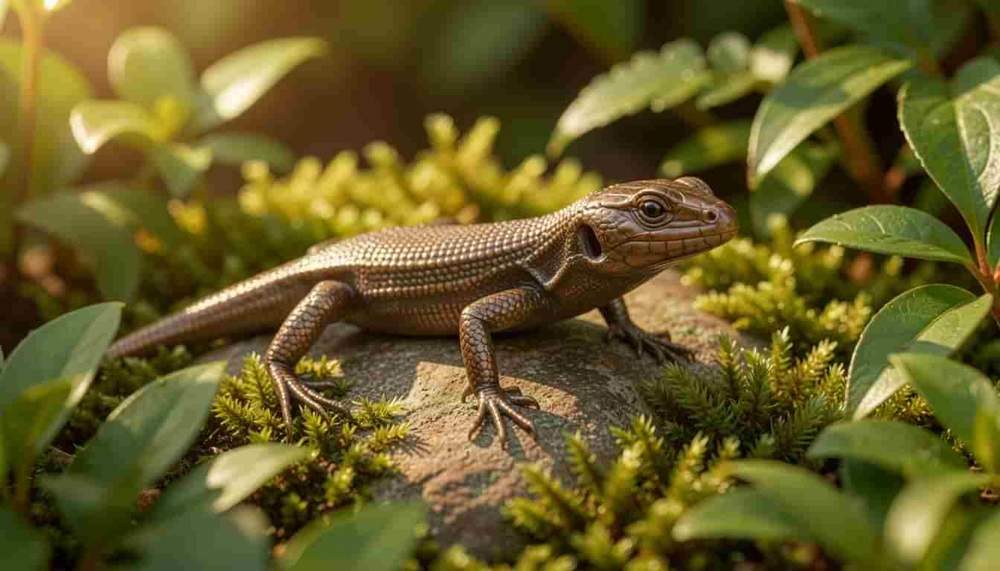
The direct skink meaning refers to a lizard belonging to the family Scincidae. These reptiles occupy nearly every continent, yet they remain masters of secrecy. You identify them by their elongated bodies, reduced or absent necks, and legs that range from fully functional to completely missing. Their physical design is not a random accident. It represents a precise evolutionary answer to a life spent navigating leaf litter, loose soil, and tight crevices. Understanding the skink meaning properly requires you to look past surface appearances and examine their unique anatomy.
Zoologists classify skinks separately from other lizards. The fusion of their head plates, the presence of bony plates called osteoderms beneath their scales, and a tapering tail that detaches easily all factor into the precise scientific definition. You are looking at a creature engineered for survival, not just a “snake with legs.” When someone asks about the skink meaning, they rarely realize these reptiles wear a hidden coat of armor beneath those glossy scales.
The Skink vs. Snake Visual Guide
Your eyes can deceive you quickly when a skink darts across the trail. Snakes lack movable eyelids, giving them an unblinking stare. Skinks possess clean, transparent eyelids and they blink. Snakes swallow prey whole using highly flexible, unhinged jaws. A skink’s jaw structure remains rigid, forcing it to shake or chew larger insects violently to break them down. Look for the ear opening next. Snakes lack external ears entirely, while skinks display visible ear holes behind their eyes. These three markers—blinking eyes, visible ears, and rigid jaws—solidify the true skink meaning and separate it from its serpentine mimics immediately.
| Trait | Skink | Snake |
|---|---|---|
| Eyelids | Movable, blinks regularly | No eyelids, transparent fixed scale |
| Ear Openings | Visible external holes | Completely absent |
| Scales | Smooth, overlapping, bony plates underneath | Typically keeled or smooth, no osteoderms |
| Tail Autotomy | High; detaches and regenerates | Rare or non-existent |
| Jaw Structure | Fixed, must crush prey mechanically | Unhinged, swallows prey whole |
Why Anatomy Defines the Skink Meaning
You cannot grasp the full skink meaning without looking under the skin. These animals carry a secret layer of armor. Unlike typical garden lizards with soft, granular scales, skinks possess osteoderms. These microscopic bone deposits sit embedded inside each scale, creating a flexible chainmail that shields against predators and dehydration. This defense mechanism allows them to thrive in dry, abrasive environments where soft-skinned species perish. The skink meaning truly comes alive when you appreciate this built-in survival gear.
Their cranial structure also sets records for durability. The skull plates are fused into a solid casque. When a skink dives headfirst into the soil to escape a fire or hawk, the compact, wedge-shaped head absorbs the impact. The cylindrical body, powered by lateral undulation, pushes through the substrate. This is not slithering; it is swimming through the earth. The reduction of leg size represents an evolutionary trade-off—sacrificing high-speed sprinting for superior underground maneuverability. Every part of the skink meaning connects back to this burrowing lifestyle.
The Ecological Role: A Backyard Necessity
Observing a skink sunbathing on your patio carries a deeper significance. The ecological skink meaning ties directly to pest control and soil health. They operate as an apex insectivore in the microhabitat of your garden. A single adult will patrol a territory, consuming beetles, crickets, grasshoppers, and larvae daily. Without this pressure, herbivorous insect populations explode, damaging root systems and ornamental plants.
They also serve as a critical food source within higher food webs. Birds of prey, foxes, and medium-sized snakes depend on skinks for protein. Their presence indicates a bio-active, low-contaminant environment. Skinks absorb toxins through their skin and prey; a thriving population signals a clean, pesticide-free yard. If you find them, you possess a healthy slice of the ecosystem. They break down organic matter indirectly by shredding larger insects, accelerating nutrient cycling back into the soil. The skink meaning extends beyond the animal itself—it signals environmental wellness.
Global Distribution and Preferred Habitats
The Scincidae family chose a cosmopolitan route. You locate them in the arid deserts of Australia, the humid rainforests of Southeast Asia, and the temperate woodlands of North America. They bypass the extreme cold of Antarctica and the most isolated oceanic islands. The five-lined skink (Plestiodon fasciatus) populates the eastern United States, while the blue-tongued skink (Tiliqua scincoides) defines the Australian outback landscape. The Solomon Islands skink proves the rule’s exception—it lives in trees and forms social family groups, a rarity among reptiles.
Habitat selection always centers on moisture and cover. Skinks seek out the boundary zones where grass meets forest, or where rotting logs touch moist earth. You will uncover them beneath corrugated metal sheets, flat stones, and thick leaf piles. These spots offer the high humidity needed for shedding and the thermal gradient needed for cold-blooded thermoregulation.
Unique Defense Mechanisms
The definition shifts the moment a predator attacks. Autotomy, the voluntary loss of the tail, represents the most dramatic physical defense. Muscular sphincters at the fracture planes inside the vertebrae clamp down to stop bleeding immediately. The detached tail writhes and jumps for up to thirty minutes, bombarding the predator’s senses with movement while the body freezes. This isn’t just dropping a part; it is deploying a neurological decoy. Grasping this aspect of skink meaning reveals how evolution crafted a perfect escape artist.
Beyond the tail, skinks employ chemical warfare through scent. When a snake or mammal corners them, some species release a pungent musk from cloacal glands. This smell triggers an avoidance response in hunting dogs and cats. Finally, body language seals the deal. The blue-tongued skink opens its mouth wide, flashing a bright cobalt tongue against a pink maw. To a bird, this sudden color contrast signals toxicity, even though it is a total bluff. The animal inflates its body, hisses, and flattens its ribs to appear too large to swallow. The skink meaning encompasses bluff, bravery, and brilliant trickery.
Reproduction and Life Cycle
The skink meaning shifts during breeding season, transforming solitary animals into devoted guardians. While most reptiles deposit eggs and leave forever, many skink species shatter this rule. Female five-lined skinks coil their bodies around a clutch of eggs for up to six weeks. They turn the eggs to prevent membrane adhesion, urinate on them to maintain humidity, and viciously defend them from beetles and centipedes. This maternal attendance drastically increases hatching success.
A subset of skinks pushes development further by evolving viviparity—live birth. The young develop inside the mother’s oviduct, receiving nutrition through a simple placenta-like structure. This adaptation allows populations to move into colder mountain elevations where eggs would rot in the cold soil. Hatchlings arrive fully independent, miniature replicas of the adults. Blue-tailed juveniles use this bright coloration as a survival tactic; birds strike at the distracting neon tail rather than the vital torso. The tail grows back, the scarred head does not.
Skinks and Human Interaction
You rarely hear a skink before you see it, but the rustle under dry leaves gives it away. These reptiles pose zero danger to your family. They carry no venom glands that threaten mammals. A bite from a larger species like a shingleback may pinch and draw a drop of blood, but it never delivers necrotic toxins. The primary risk involves bacteria. Always wash your hands after any accidental handling; their skin can carry salmonella microbes just like raw poultry. The practical skink meaning for homeowners centers on peaceful coexistence and basic hygiene.
Keeping a skink as a pet requires acknowledging their specific needs. Blue-tongued skinks thrive in captivity due to their docile nature and omnivorous diet, readily eating dog food, snails, and greens. The Schneider’s skink suits advanced keepers who value high activity and arid setup design. You must supply UVB lighting to prevent metabolic bone disease, a dense substrate for burrowing, and a precise heat gradient. Captivity does not erase the deep instinct to tunnel; a skink without soil exhibits stress through glass surfing and nose rubbing.
Conservation Status and Threats
The skink meaning extends into conservation biology as a warning bell. The IUCN lists several species in critical danger. Habitat fragmentation from suburban sprawl slices populations into genetic islands. A single parking lot becomes an impassable barrier, leading to inbreeding and local extinction. Feral cats amplify the crisis. In New Zealand, introduced mammals have wiped out entire lizard communities, leaving only those skinks surviving on predator-free offshore sanctuaries.
Climate change threatens temperature-dependent species. In species where nest temperature determines sex, a few degrees of ambient warming can produce all-male clutches, collapsing the breeding population within a single season. You can support skink conservation by preserving native leaf litter, eliminating pesticide runoff, and keeping pet cats indoors. Every retained rock pile becomes a refuge in a landscape of manicured lawns. The deeper skink meaning here is a call to responsible stewardship.
Expert Note: According to Dr. J. Scott Keogh, evolutionary biologist at the Australian National University, “Skinks represent one of the most spectacular adaptive radiations in squamate history. Their limb reduction has evolved independently over two dozen times, making them a prime model for studying evolutionary convergence.”
(Source: Australian National University, Biology Letters)
Cultural and Symbolic Meaning
Humans layered symbolic skink meaning onto these animals for centuries. Polynesian cultures frequently carved the skink into petroglyphs, associating them with agility and secrets. Indigenous Australian Dreamtime stories position the skink as a healer or a guardian of sacred watering holes, often credited with teaching humans the location of underground springs. In Caribbean folklore, the skink’s ability to shed its tail and regrow it linked it to themes of regeneration and cheating death.
Modern branding uses the skink to signal speed and camouflage. Military-style outdoor gear occasionally adopts the skink silhouette to imply low visibility and rapid response. Spiritually, spotting a skink in meditation traditions suggests the need to adapt quickly to a shifting emotional environment and to discard aspects of the past that serve no purpose—directly mirroring the tail drop. The animal embodies the art of letting go to survive. Across cultures, the skink meaning consistently points toward renewal, resilience, and quiet strength.
Frequently Asked Questions About Skink Meaning
What is the direct dictionary meaning of a skink?
A skink is a smooth-bodied, typically shiny-scaled lizard of the Scincidae family. Its physical form often features short or absent limbs and a distinct, elongated shape that aids in burrowing through ground debris.
How can you instantly tell a skink apart from a snake?
You must check for three visible features. Skinks possess external ear openings that snakes always lack. Skinks have movable eyelids and blink frequently. Snakes maintain a permanent, unblinking fixed scale covering their eyes.
Are skinks harmful or venomous to humans?
No, skinks carry no medically significant venom for humans. They remain harmless garden visitors. A bite from a large skink may cause a minor pinch, but the primary caution involves washing hands afterward to prevent salmonella transmission.
What purpose does a skink serve in the backyard?
They act as a natural pest management service. Skinks feed aggressively on crickets, beetles, moth larvae, and spiders. Their existence prevents pest outbreaks and signals a healthy, low-toxin environment in your outdoor space.
Why is the blue-tailed skink’s color so bright?
The intense blue coloration on the juvenile tail serves as a predatory deflection target. Birds and small mammals attack the flashing blue tail. The tail detaches easily, giving the young skink a critical window to flee and hide.
Do skinks genuinely care for their young?
Female skinks in several species exhibit extensive parental attendance. They coil around egg clutches, guard the nest fiercely, turn eggs to stop them from sticking, and lick them for hydration. This maternal care is rare among lizards.
Conclusion: Respecting the Silent Garden Guardian
The skink rewards the careful observer. You now hold the knowledge that a skink’s meaning goes far beyond a simple reptile label. It is an armored anomaly, a pest control expert, and a protective mother hiding beneath the woodpile. Next time you lift a stone and see those polished scales and bright eyes, recognize the intricate survival engineering at work. Give these allies a safe space by leaving a section of your yard wild. Pile those rocks, preserve the leaves, and skip the chemicals. Let the skink live its quiet, vital life right outside your door.