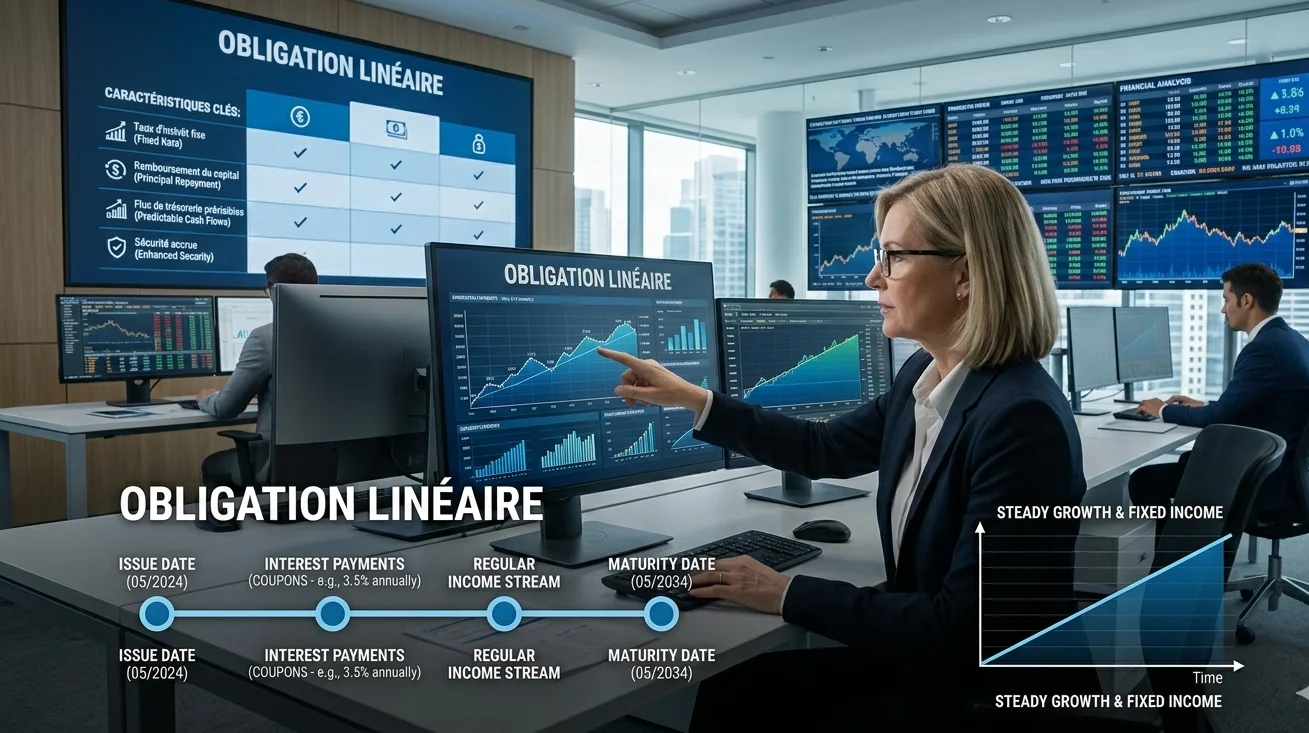
obligation linéaire
Understanding Obligation Linéaire in Plain English
Let us talk about a term you might have seen in financial news: obligation linéaire. It sounds formal, and it comes from French. But the idea behind it is something we all understand. It is about lending money and getting paid back with a little extra. Think about loaning a friend twenty dollars. They promise to return it next week. Maybe they even buy you coffee to say thanks. An obligation linéaire works the same way, just on a much bigger scale and with a country instead of a friend.
The country in this case is Belgium. When you put money into an obligation linéaire, you are basically saying, “I trust you, Belgium, to hold my cash for a while.” In return for that trust, the government pledges to give you regular small payments. These are your thanks, also known as interest. After a set number of years, they give you back every penny you lent them. This cycle of lending, waiting, and getting paid makes it a favorite tool for people who prefer a calm and steady approach to growing their savings.
Breaking Down Those Two Words
Why does it have such a fancy name? Let us pull it apart piece by piece. The first word, “obligation,” is simply the French term for a bond. A bond is just a formal promise to repay a debt. So that part makes sense. The second word, “linéaire,” translates to linear. This is where the unique character of this bond shows up. It is linear because the Belgian government does not start a completely new bond every single time it needs funds. Instead, it keeps adding to the same bond line over and over.
This method creates a very clean and organized system. Because the government keeps issuing more of the same bond, there ends up being a large pool of identical investments available. This is great news for anyone who might need to sell their bond before the final date. Having many identical pieces available means there are always buyers and sellers. It keeps the market moving smoothly. So, the name is not just for show. It actually describes a bond that is consistent, predictable, and easy to trade, which are three wonderful qualities in the investment world.
Walking Through the Life of a Bond
Let us imagine you decide to join this process. What does the journey look like from start to finish? It begins on a specific day when the Belgian treasury opens the doors for a new issue. They announce the details, like how much interest they will pay and when the bond will finally mature. You decide to take part. Your money leaves your account and goes to the government. In its place, you now hold a digital record that proves the government owes you that amount.
Then comes a period of waiting, but it is a productive wait. The government does not forget about you. Every year, on the same date, they send a payment to your account. This is the interest they promised. This continues year after year, like clockwork. Finally, the calendar reaches the maturity date. This is the finish line. On this day, the government sends you one last large payment. This payment equals the full amount you originally lent them. The loop is closed. You got your money back, and you enjoyed those yearly payments along the way. It is a complete and tidy financial journey.
The Core Qualities That Define It
What makes this specific bond stand out in a crowded market? It boils down to a few core qualities that investors really value. First, it is tied to the euro. This is the official money of many European countries. For someone in the United States, holding an investment in euros adds a layer of variety to their savings. It means not all your eggs are in the dollar basket. Second, the interest rate on most of these bonds is fixed from day one. You lock it in. If rates everywhere else drop, yours stays the same. If rates soar, you are still getting your original agreed rate.
Another huge point is how easy it is to trade. Because the market for these bonds is deep and active, you are never trapped. If an unexpected expense comes up and you need cash, you can likely sell your bond quickly. This is called liquidity. Here are the main qualities that make this bond a popular choice:
- Sovereign Backing: It carries the promise of a national government, which is considered a very strong guarantee.
- Currency Diversification: It is denominated in euros, offering a hedge against movements in the US dollar.
- Income Certainty: The fixed payments give you a clear picture of your future income stream.
- Market Accessibility: You can enter or exit your position relatively easily thanks to the high trading volume.
These qualities combine to create an investment known for its dependability.
A Quick Look at the Main Details
To make things even clearer, here is a simple table that puts all the key information in one place. It gives you a fast snapshot of what this bond is all about.
| Aspect | Simple Explanation |
|---|---|
| Who Sells It | The national government of Belgium. |
| What Money It Uses | Euros, the currency of the Eurozone. |
| How You Get Paid | Usually a fixed payment, sent to you once every year. |
| Can You Sell It | Yes, easily. There is a large, active market for these bonds. |
| When It Ends | On a set future date, when you get your original money back. |
Reasons to Consider This Bond
You might still be wondering if this has any place in your personal financial plan. It is a fair question. The main reason people look at bonds like this is for a sense of calm. The stock market can be a wild ride. Prices jump up and down based on news, earnings reports, and global events. A government bond does not do that. It sits quietly. It pays its interest and waits for maturity. This makes it a wonderful tool for balancing out the more exciting parts of your savings.
For someone getting close to retirement, this steadiness is gold. You do not want your nest egg swinging wildly right when you need to start using it. The predictable payments can also supplement a pension or social security. Even for younger savers, having a slice of your money in something this stable makes sense. It is the foundation of a good financial house. Here are some specific reasons people add this to their mix:
- To Build a Foundation: It acts as a stable base, allowing you to take more calculated risks elsewhere.
- To Generate Predictable Income: The regular payments can help cover living expenses or be reinvested.
- To Reduce Overall Portfolio Stress: When stocks fall, this type of bond usually holds its value, which helps you sleep better at night.
- To Save for a Specific Date: If you know you need a certain amount of money in ten years, a bond maturing at that time can be a perfect fit.
Exploring the Different Varieties Available
While the fixed-rate version is the most common, the Belgian government does offer a few other flavors to suit different tastes. It is good to know they exist so you can pick what matches your outlook. The standard choice is the fixed-rate bond. You pick it, and the rate never changes for the entire life of the bond. It is the definition of “set it and forget it.” Then there is a floating-rate version. With this one, the interest payment can move up or down. It is tied to a major market rate, so if that rate goes up, your payment goes up too.
There is also a special bond designed to fight inflation. Inflation is the silent enemy that makes your money worth less over time. This bond has a built-in shield. If inflation rises, the bond’s value and your interest payments adjust upward to keep pace. Here is a simple guide to the options:
- Fixed-Rate: The rate is locked in. Perfect for those who hate surprises.
- Floating-Rate: The rate changes with the market. Good for times when you think rates will rise.
- Inflation-Linked: The value adjusts with the cost of living. Ideal for long-term savers worried about losing purchasing power.
- Zero-Coupon: You buy it at a discount and get the full face value at the end. No yearly payments, just a lump sum at maturity.
Each one serves a different purpose, so knowing the difference helps you make a smarter choice.
How Time Horizons Change the Game
The length of time until a bond matures is a very big deal. It is not just a date on a calendar. It shapes how the bond behaves and what it pays you. You can find bonds that mature in just a couple of years. These are short-term. They usually pay a lower interest rate because your money is not tied up for long. On the other end, there are bonds that mature in twenty or even thirty years. These long-term bonds generally pay a higher rate to reward you for waiting so long.
But there is a trade-off. Long-term bonds are more sensitive to what is happening in the wider economy. If interest rates everywhere suddenly jump up, the value of your older, lower-rate bond will drop if you try to sell it early. Short-term bonds barely flinch. So your choice of time frame depends on your personal goals. Here is how to think about it:
- Short-Term (Under 5 Years): You get lower payments, but your money is returned quickly. There is very little price movement.
- Medium-Term (5 to 10 Years): This is a middle path. You get a decent payment without taking on too much price risk.
- Long-Term (Over 10 Years): You get the highest possible payment. But you accept that the bond’s price will move more if interest rates change.
Matching the time frame to your goal, like retirement or a child’s college fund, is the smart way to use these bonds.
The Main Players in This Market
Who actually buys these things? You might be surprised. While regular people can and do buy them, the biggest buyers are massive organizations. Think about a pension fund. They have to pay thousands of people every month for decades. They need investments that are as safe as houses and pay reliably forever. An obligation linéaire fits that need perfectly. Insurance companies are another big buyer. They collect premiums now and pay claims later. They need to invest that money somewhere very secure.
Central banks also buy huge amounts. They use government bonds as a safe place to store a nation’s wealth. They also use them to help manage the money supply. Even other countries might buy them. Here is a list of the typical buyers:
- Pension Funds: For matching long-term promises with safe, long-term assets.
- Insurance Companies: For safely investing the premiums they collect.
- Central Banks: For storing national reserves and managing monetary policy.
- Foreign Governments: As part of their own reserve holdings.
- Individual Investors: People like you, often accessing them through funds, to add stability to their personal savings.
These giant players value the safety and the ease of trading in large quantities. For them, it is the quiet, dependable workhorse of their investment strategy.
How It Stacks Up Against Other Bonds
Putting this bond next to others can really help you see its place in the world. In the United States, we have Treasury bonds. They are incredibly similar. Both are sold by a stable national government. Both are seen as very safe. The main difference is the currency and the specific country backing them. One is in dollars, the other in euros. In Europe, Germany has its own famous bonds called “Bunds.” France has “OATs.” The obligation linéaire is Belgium’s entry in this club of top-tier European government debt.
How does it compare to a bond from a company? A company bond, say from a big tech firm, is riskier. Companies can have bad years or even go out of business. Because of that higher risk, they have to offer a higher interest rate to attract buyers. The Belgian government bond offers a lower rate, but you get that rock-solid safety in return. Here is a quick comparison:
- vs. US Treasuries: Very similar, just in different currencies. They serve the same purpose in their home markets.
- vs. German Bunds: Belgian bonds may offer a slightly higher rate than German ones, as Germany is seen as the safest in Europe.
- vs. Corporate Bonds: Government bonds are safer and pay less. Corporate bonds are riskier and pay more.
- vs. US Municipal Bonds: US city bonds often have special tax breaks. The Belgian bond does not offer those US tax benefits.
It all comes down to the classic choice: higher safety with lower pay, or higher pay with higher risk.
Being Real About the Potential Downsides
We have talked a lot about the positives. But being honest about the risks is just as important. No investment is perfect. The biggest thing to watch out for is what happens when interest rates move. Imagine you buy a bond and lock in a rate. Then, a year later, rates everywhere go up. Your bond is now less attractive because newer bonds pay more. If you need to sell yours early, you might have to accept a lower price. You only get your full money back if you wait until the very end.
Another quiet risk is inflation. If your bond pays you two percent, but prices in the store go up by three percent, your money is actually shrinking in terms of what it can buy. You have more euros, but they buy less bread and milk. This is a slow drain on your wealth. For US buyers, there is also the currency question. The bond is in euros. If the euro loses value compared to the dollar, your investment is worth less when you convert it back. Here are the risks summed up:
- Interest Rate Risk: Bond prices fall when market rates rise. This only hurts if you sell early.
- Inflation Risk: Your fixed payments might not keep up with rising living costs over many years.
- Currency Risk: For US holders, a weaker euro means a weaker return in dollar terms.
- Credit Risk: The very small chance that the Belgian government could face trouble meeting its promises.
Knowing these risks helps you go in with your eyes wide open.
A Simple Guide for US-Based Buyers
If you are in the United States and this sounds interesting, how do you actually get started? You probably will not open an account in Belgium. The easiest path is through funds that trade on US stock exchanges. These are called ETFs, or exchange-traded funds. Many big investment companies offer ETFs that own a basket of European government bonds. This basket likely includes Belgian bonds. Buying one share of the ETF gives you a tiny piece of many different bonds. It spreads your risk instantly.
You buy and sell these ETFs just like you would buy a share of Apple or Microsoft. You need a regular brokerage account. Before you buy, spend a few minutes looking at the fund’s details. See what countries it holds. Check its fees. Lower fees are always better. Here are some steps to get going:
- Open a Brokerage Account: If you do not have one, Vanguard, Fidelity, or Schwab are good places to start.
- Look for International Bond ETFs: Search for terms like “international Treasury ETF” or “European government bond fund.”
- Read the Fund’s Details: Check the “holdings” section to see how much is in Belgian bonds. Check the “expense ratio” for fees.
- Consider Currency Risk: Some funds have a “hedged” version that tries to reduce the impact of euro-to-dollar swings.
- Start with a Small Amount: You can always add more later once you are comfortable.
Remember, you are buying this for stability. Do not chase the highest yield. Look for a solid, well-managed fund with reasonable fees.
Answers to Common Questions
1. How safe is a bond from Belgium really?
It is considered a very safe place for your money. Belgium is a wealthy, stable country with a strong credit history. It is much safer than a bond from a company and provides a very reliable return.
2. What is the easiest way for an American to buy one?
The easiest way is through an ETF. These funds trade on US stock exchanges. You can buy them in any standard brokerage account just like you buy stocks.
3. How often will I see money from this investment?
For most of these bonds, you will receive a payment once every year. This payment is the interest the government promised when you bought the bond.
4. What exactly happens on the final maturity date?
On that date, the bond’s life ends. The Belgian government sends you back the full amount of money you originally lent them. The investment is complete.
5. What is the one thing that could go wrong?
The main risk is that interest rates might rise after you buy. If that happens and you need to sell early, you might get back less than you paid. If you wait until the end, you get everything back.
6. Is the interest rate always fixed?
In most cases, yes. Traditional versions of this bond come with a set interest rate that remains unchanged for the entire term. However, some government-issued alternatives work differently. Certain variants allow the interest rate to change over time or adjust based on inflation, which means the returns can rise or fall depending on economic conditions.
Why Stability Matters in Your Financial Plan
Growing your savings can be compared to constructing a home. Before adding decorative features, you first need a dependable base. Bonds such as an obligation linéaire can serve as part of that base. Their strength lies in reliability rather than excitement.
This type of investment is not designed to create sudden wealth. Instead, it offers something many investors value even more: consistent income and the reassurance that the original amount you invested will be repaid at a predetermined time. That level of predictability can add a sense of balance and peace to your overall financial strategy.
When thinking about your long-term financial goals, consider the role you want your money to play. Would you like a portion of your savings to remain secure and dependable? Are you interested in receiving regular payments you can plan around? If so, exploring bonds like this could be a wise decision.
While they may not attract attention the way high-risk investments do, bonds often become one of the most reassuring components of a portfolio. They provide stability and help investors feel confident that part of their financial future is protected. Taking the time to evaluate whether this European-style bond fits into your broader financial plan could be a smart step toward long-term security.
| Read More Informative Blogs Like This. Tap Here 👉 The Ultimate Owala Water Bottle Guide 2026 |
About the Author


