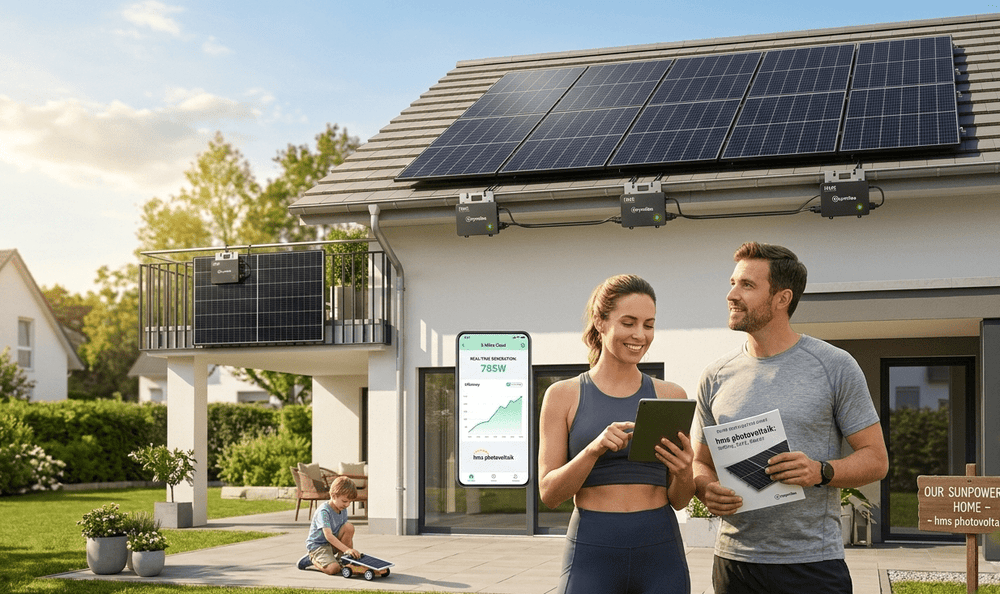
hms photovoltaik
Introduction
Have you been thinking about solar panels for your home but feel confused by all the technical options? You are not alone. Many homeowners want clean energy and lower electric bills but get lost in inverter choices, panel compatibility, and installation rules. That is where HMS Photovoltaik comes into the picture. This term refers to a family of advanced microinverters made by Hoymiles, a global leader in solar technology . Unlike old-fashioned string inverters that handle all your panels together, HMS systems put a small inverter on each panel. This simple change makes a huge difference in how much power you actually get from your solar investment. Whether you have a small balcony setup or a full roof installation, understanding HMS Photovoltaik helps you make smarter energy decisions. Let me walk you through everything you need to know about these innovative systems and why they might be perfect for your home.
Here is why HMS Photovoltaik matters for American homeowners:
- Module-level technology maximizes energy harvest from every panel
- Independent operation means shade on one panel doesn’t cripple your whole system
- Real-time monitoring shows exactly how each panel performs
- Safety features like rapid shutdown meet modern electrical codes
- Systems scale easily from small balconies to whole-house installations
What Exactly Is HMS Photovoltaik?
HMS Photovoltaik refers specifically to the Hoymiles HMS series of microinverters, which are compact devices that convert direct current (DC) from solar panels into usable alternating current (AC) for your home . The “HMS” name covers several models including the popular HMS-800-2T for two-panel setups and larger HMS-2000-4T for four-panel arrays . Unlike traditional string inverters where one central unit handles all panels, HMS microinverters work independently on each panel. This means every panel operates at its own maximum power point, unaffected by shade or dirt on neighboring panels . The technology represents a shift toward smarter, more resilient solar systems that deliver more energy over their lifetime. Hoymiles has been refining these products since 2012 and now serves customers in over 180 countries, building a reputation for reliability and innovation .
The HMS family includes models ranging from 300 to 2000 watts, covering everything from single-panel systems to full rooftop installations . Each unit comes with multiple independent MPPT channels that track maximum power point separately for each connected panel . This design philosophy puts control where it belongs—at the individual panel level.
The HMS Product Family: Finding Your Perfect Match
Understanding the different HMS models helps you choose the right system for your specific needs. The lineup breaks down into two main categories based on how many panels each unit serves.
For smaller installations, the HMS-2T series handles two panels with two independent MPPT channels . Popular models include the HMS-800-2T, which works perfectly for balcony solar systems often called Balkonkraftwerk in Europe but gaining popularity in US apartments and condos . These compact units deliver reliable power while maintaining panel-level optimization. The HMS-800-2T pairs well with modern high-efficiency panels in the 400-500 watt range .
For larger systems, the HMS-4T series manages four panels through four separate MPPT channels . The HMS-1600-4T, HMS-1800-4T, and HMS-2000-4T give homeowners flexibility to build arrays that match their energy needs . These units accept common module watt classes from 450 to 500 watts, enabling smart DC-to-AC ratios that boost morning and evening production . The 4-in-1 design means fewer microinverters for the same capacity, simplifying installation while maintaining all the benefits of module-level power electronics .
How HMS Microinverters Work: Simple Technology, Big Results
The magic of HMS Photovoltaik lies in how these devices handle the electricity your panels produce. Each solar panel generates DC electricity, but your home and the grid use AC electricity. The microinverter bridges this gap right at the panel location.
When sunlight hits your panels, the HMS microinverter immediately gets to work. It tracks the maximum power point for its specific panel using sophisticated algorithms that respond to changing light conditions . As clouds pass overhead or the sun moves across the sky, the inverter constantly adjusts to pull the maximum possible energy . This per-panel optimization is the key advantage over string inverters, where one poorly performing panel drags down the whole array.
The converted AC power then flows through standard wiring to your home’s electrical panel. Any excess power feeds into the grid, spinning your meter backward under net metering programs. Throughout this process, the microinverter monitors voltage, current, and temperature to ensure safe, efficient operation . The advanced models include reactive power control, helping stabilize grid voltage and meeting modern utility requirements .
Installation Made Simple: Plug-and-Play Solar
One reason HMS Photovoltaik has become so popular is the remarkably simple installation process. These systems use a true plug-and-play design that reduces labor costs and installation time .
Each HMS microinverter comes with standard DC input connectors that snap directly onto your solar panel leads. The AC side features weather-sealed connectors that link units together in a simple daisy chain. This trunk cable approach means running one continuous AC line along your array, with each microinverter plugging in along the way . No complex wiring diagrams, no custom junction boxes, no specialized tools.
The compact size of HMS units deserves mention too. These inverters hide directly underneath your solar panels, taking zero extra space on your roof . The low-profile design maintains your home’s aesthetics while protecting the electronics from weather. With IP67-rated enclosures, they resist dust, rain, and even temporary immersion—perfect for withstanding decades of outdoor exposure .
For DIY enthusiasts, this simplicity opens possibilities. Many homeowners successfully install HMS-based systems themselves, particularly for ground-mounted or balcony applications. Professional installers appreciate the time savings, which translate to lower quotes and faster project completion.
Real-Time Monitoring: See Every Watt Your Panels Produce
Perhaps the most empowering feature of HMS Photovoltaik is the comprehensive monitoring capability. Hoymiles provides the S-Miles Cloud platform, giving you real-time visibility into your system’s performance .
A small gateway device called DTU connects to your home router and communicates wirelessly with every HMS microinverter on your property . The latest models use Sub-1G wireless technology, which penetrates walls better than Wi-Fi and maintains reliable connections even in challenging environments . For larger homes or difficult layouts, the DTU-Pro-S offers enhanced range and signal stability .
Once connected, the S-Miles Cloud dashboard shows you exactly what each panel produces, updated every few minutes. You can see daily energy totals, compare panel performance, and spot potential issues before they become problems . If one panel underperforms due to dirt buildup or a developing fault, you will know immediately and can take action.
The system also tracks your home’s overall solar production, carbon offset, and financial savings. Mobile apps let you check performance from anywhere—while on vacation, at work, or just relaxing in your living room . This transparency builds confidence in your solar investment and helps maximize long-term returns.
Safety First: How HMS Systems Protect Your Home
Solar electricity involves real power, and safety must come first. HMS Photovoltaik incorporates multiple layers of protection that exceed basic requirements.
The most critical safety feature is rapid shutdown compliance. Modern electrical codes including NEC 690.12 require that solar systems reduce voltage to safe levels within seconds of shutdown activation . HMS microinverters meet this requirement automatically. When the grid goes down or an emergency responder hits the disconnect, each microinverter immediately stops producing power, eliminating dangerous high-voltage DC on your roof .
Thermal management represents another safety priority. HMS units operate at 100% rated power at ambient temperatures up to 40°C, with minimal performance loss even on hot summer days . The advanced thermal design prevents overheating, extending component life and maintaining safe operation. Built-in sensors constantly monitor internal temperatures, throttling back only if absolutely necessary .
Electrical protection includes anti-islanding, which prevents the system from energizing the grid during outages and endangering line workers. Ground fault detection, overvoltage protection, and overcurrent protection all operate automatically . Every HMS unit undergoes rigorous testing and certification to UL 1741 and IEEE 1547 standards, ensuring compatibility with North American electrical systems .
Comparing HMS to Traditional String Inverters
Understanding the differences between HMS Photovoltaik and conventional string inverters helps clarify why microinverters often win for residential applications.
With a string inverter, all your panels connect in series like old Christmas lights. Current flows through every panel, limited by the weakest performer. One shaded panel, one dirty panel, or one panel with a microcrack reduces output for the entire string . Morning and evening production suffers disproportionately because low light affects the whole series.
HMS systems eliminate this problem entirely. Each panel operates independently, so shade on one corner of your roof only affects that single panel. The rest continue producing at full capacity . This independence typically yields 5 to 25 percent more annual energy compared to string inverter systems, depending on your site conditions .
String inverters also create high-voltage DC wiring running across your roof, which poses safety risks and requires expensive conduit. HMS systems keep voltage low at the panel level, with only AC wiring in the main runs . Installation becomes simpler, safer, and often cheaper despite having more devices.
The tradeoff comes at initial cost. Microinverters cost more upfront than a single string inverter. However, the energy gains and longer system life often offset this difference within a few years . Many homeowners decide the extra production and monitoring capabilities justify the investment.
Real-World Performance: What HMS Systems Actually Deliver
Numbers on specification sheets matter less than real-world results. Testing on actual HMS installations reveals impressive performance across various conditions.
In balcony installations with southwest orientation, HMS-800-2T systems paired with two 460-watt panels average 2.1 to 2.4 kilowatt-hours daily during winter months . Summer production jumps to 4.5 to 5.2 kilowatt-hours per day, providing meaningful energy savings even in small spaces . The low-light performance stands out—these systems start generating as early as 16 volts input, capturing energy at sunrise and sunset that string inverters miss .
Larger four-panel ground arrays using HMS-2000-4T deliver 6.5 kilowatt-hours daily in winter and up to 12.5 kilowatt-hours on summer days . The DC-to-AC oversizing strategy pays off here, with morning and evening shoulders contributing about 30 percent of total daily production . Brief midday clipping occurs under perfect conditions, but the extra shoulder energy more than compensates.
Thermal performance exceeds many competitors. While typical microinverters begin derating at 25 to 30 degrees Celsius, HMS units maintain full output up to 40 degrees . This matters for rooftop installations where summer temperatures soar. Your system keeps producing when others throttle back.
HMS and Energy Storage: Preparing for Batteries
The solar landscape is changing, particularly in states like California with new net metering rules. HMS Photovoltaik positions you well for this transition by integrating smoothly with battery storage .
Hoymiles offers AC-coupled storage solutions that pair perfectly with HMS microinverters. The HAS series inverters connect to your existing HMS system, capturing excess solar production and storing it in batteries for evening use . When your panels produce more than your home needs, the excess charges batteries instead of feeding the grid at low value.
This architecture proves especially valuable under NEM 3.0 in California, where exported power earns far less than before . Storing your own energy and using it during peak evening hours maximizes savings and speeds payback. The system automatically manages this flow, prioritizing self-consumption, then battery charging, then grid export .
As battery prices continue falling, many homeowners appreciate that their HMS system can add storage later without replacing existing equipment. Future-proofing matters when making long-term energy investments.
HMS Photovoltaik Specifications Table
| Model Series | Input Channels | MPPT Channels | Typical Panel Wattage | Rated Output Power | Best Application |
|---|---|---|---|---|---|
| HMS-300/350/400/450/500-1T | 1 | 1 | 240-670W | 300-500VA | Single-panel systems |
| HMS-600/700/800/900/1000-2T | 2 | 2 | 400-600W per channel | 600-1000VA | Two-panel balconies, small roofs |
| HMS-1600/1800/2000-4T | 4 | 4 | 450-500W per channel | 1600-2000VA | Four-panel arrays, full roofs |
| Key Feature | Specification | Benefit | |||
| :— | :— | :— | |||
| Enclosure Rating | IP67 | Dustproof, waterproof, can handle immersion | |||
| Startup Voltage | 16V | Early morning, late evening production | |||
| Operating Temperature | -40°C to +65°C | Works in all climates | |||
| Communication | Sub-1G wireless | Reliable through walls, no Wi-Fi needed | |||
| Monitoring | S-Miles Cloud | Real-time per-panel data | |||
| Safety Compliance | UL 1741, IEEE 1547, NEC 690.12 | Certified for USA installation | |||
| Warranty | 12-25 years depending on model | Long-term peace of mind |
Choosing the Right HMS System for Your Home
Selecting the perfect HMS Photovoltaik setup depends on your specific situation and goals.
For apartment dwellers or renters, a balcony system using HMS-800-2T with two high-efficiency panels offers an entry point into solar without major installation . These plug-in systems reduce your electric bill and make a statement about clean energy. Check local regulations first, as some HOAs or cities have rules about visible panels.
For homeowners with partial shade, HMS systems truly shine. If trees, chimneys, or neighboring buildings cast shadows across your roof at certain times, panel-level optimization prevents major losses . The extra cost over string inverters pays back quickly through higher production.
For those planning battery storage later, HMS provides an easy upgrade path. The AC-coupled approach means you can install solar now and add storage when budget allows, without replacing equipment . This flexibility appeals to budget-conscious homeowners.
For maximum monitoring insight, HMS delivers panel-level data that helps optimize performance. You will actually see which panels produce most and whether cleaning or maintenance would help .
Installation Considerations for USA Homes
American homeowners should understand specific requirements before purchasing HMS Photovoltaik.
First, verify that your chosen HMS model carries UL 1741 certification for the United States . Hoymiles offers USA-specific versions that meet our electrical codes and utility requirements . The HMS-2000-4T and compatible models have gained popularity in North American markets .
Second, consider your net metering situation. In states with full retail net metering, maximizing total production makes sense. In states with time-of-use rates or reduced export compensation, orienting panels to match your load profile may prove more valuable .
Third, evaluate your roof’s exposure and shading. South-facing roofs produce most total energy, but west-facing arrays generate more power during late afternoon when rates often peak . HMS flexibility lets you optimize for your specific rate structure.
Fourth, work with qualified professionals. While HMS systems simplify installation, electrical work requires licensed electricians in most jurisdictions . Proper permitting ensures safety and maintains your home insurance coverage.
Troubleshooting Common HMS Issues
Even the best technology occasionally needs attention. Here are solutions to common HMS Photovoltaik concerns.
If your monitoring shows one panel underperforming, first check for obvious issues. Leaves, bird droppings, or debris might shade that specific module . A quick rinse with the garden hose often restores full production. If the problem persists, the S-Miles Cloud error logs can guide further diagnosis.
Communication dropouts sometimes occur with DTU gateways. Walls, metal structures, or distance can interfere with Sub-1G signals . Moving the DTU to a more central location or upgrading to DTU-Pro-S typically resolves these issues . The Pro model’s stronger radio handles challenging environments better.
Clipping concerns worry new solar owners who see production plateau at midday. This normal behavior indicates proper DC-to-AC ratio design . Your system intentionally oversizes panels relative to inverter capacity because the extra shoulder energy outweighs brief midday limits. No action needed.
Firmware updates occasionally improve performance or add features. The S-Miles Cloud notifies you when updates become available, and the DTU handles installation automatically . Keeping current ensures optimal operation.
Frequently Asked Questions About HMS Photovoltaik
What does HMS stand for in solar?
HMS refers to the Hoymiles microinverter series, part of their module-level power electronics lineup. The name distinguishes these products from older HM series with different communication technology and capabilities .
How much can I save with an HMS system?
Savings vary by location, electricity rates, and system size. Typical residential systems offset 60 to 90 percent of home electricity use, with payback periods of 5 to 12 years depending on incentives and local rates .
Are HMS microinverters compatible with all solar panels?
HMS units work with most standard 60-cell and 72-cell panels within their voltage and current limits. Check the input specifications against your panel’s ratings, but compatibility is broad .
Do I need batteries with my HMS system?
Batteries are optional. Many homeowners start with solar-only and add storage later. HMS systems work fine either way, though battery pairing increases energy independence and maximizes value under new net metering rules .
How long do HMS microinverters last?
HMS units carry warranties ranging from 12 to 25 years depending on model, with expected service life matching or exceeding typical panel lifetimes of 25 to 30 years .
Can I install HMS myself?
Technically inclined homeowners can handle installation, particularly for ground mounts or balcony systems. Roof installations involve safety risks and electrical codes that may require licensed professionals. Always check local requirements .
Conclusion
HMS Photovoltaik represents a smart evolution in solar technology, bringing panel-level intelligence to homes across America. The benefits are clear: more energy from every panel, real-time monitoring that puts you in control, safety features that protect your family, and future-proof design that accommodates battery storage when you are ready.
Whether you are starting with a small balcony system or planning a full rooftop array, HMS microinverters deliver the performance and reliability that make solar a worthwhile investment. The technology has matured, prices have become competitive, and the case for clean energy grows stronger every year.
If you have been considering solar for your home, now is an excellent time to explore HMS Photovoltaik. Talk with local installers about your options, check your home’s solar potential, and imagine the satisfaction of generating your own clean power. The sun shines every day—why not put it to work for you?
| Read More Informative Blogs Like This. Tap Here 👉 Ultimate Owala Water Bottle Guide 2026 |
About the Author