Jable Rehmat: The Beautiful History and Deep Meaning of the Mountain of Mercy
The Complete Guide to Jable Rehmat: A Sacred Place That Touches Hearts
Imagine standing on a hill where millions of people have cried, prayed, and found peace in their hearts. This place exists, and it is called Jable Rehmat. Muslims around the world know this mountain as the Mountain of Mercy. It sits on the plain of Arafat, not too far from the holy city of Makkah in Saudi Arabia. Every single year, during the days of Hajj, this quiet hill becomes the center of attention for over two million pilgrims. But why does this particular mountain matter so much? What makes it different from other hills and mountains around the world? The answer lies deep in history and faith.
Jable Rehmat is not just a pile of rocks and stones. It is a place where heaven and earth felt very close to each other. It is where Prophet Adam and Hawwa, or Eve, are believed to have found each other again after a long time apart. It is also the very spot where Prophet Muhammad, peace be upon him, stood and spoke his last great message to the people. These powerful stories give Jable Rehmat a special glow that pulls at the hearts of believers everywhere.
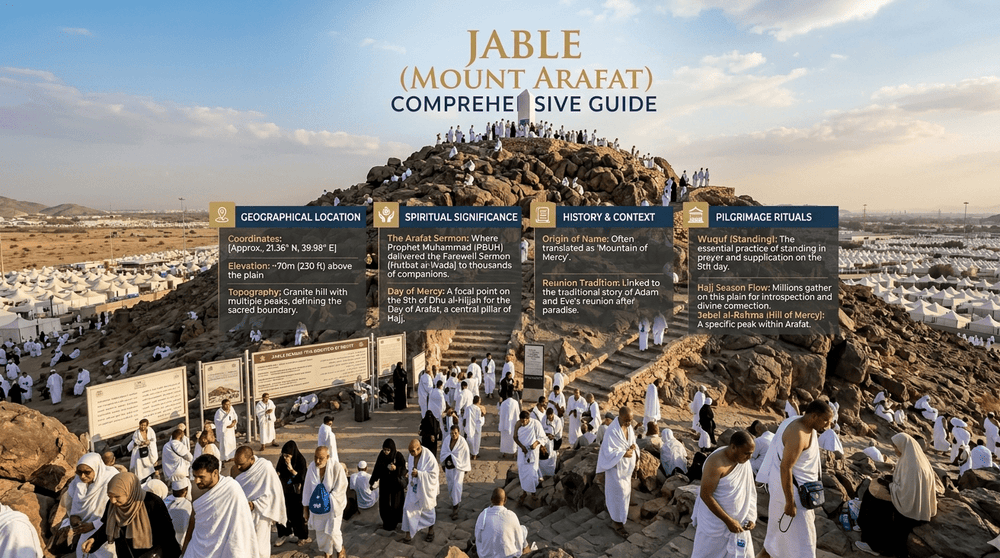
When you first see Jable Rehmat, you might notice a white pillar at its top. This pillar marks the spot where the Prophet stood during his Farewell Sermon. The mountain itself is not extremely tall or steep. But its true height comes from its meaning, not its size. People who visit this place often say they feel a strange sense of calm wash over them. The air feels different there. The ground feels holy under their feet. For those who believe, standing on Jable Rehmat is like touching a piece of history with their own hands. It connects them to stories they have heard since childhood. It makes their faith feel real and close.
This mountain has witnessed the most important moments in Islamic history. It has seen prophets pray and millions of pilgrims cry for mercy. No wonder then that Jable Rehmat holds such a high place in the hearts of Muslims all across the globe.
The Amazing Story of Prophet Adam and Hawwa at Jable Rehmat
Long, long ago, a very important event took place at Jable Rehmat. According to strong beliefs in Islam, this mountain witnessed the first human reunion. Prophet Adam and Hawwa had been sent down to Earth from Paradise. They ended up in different places, far away from each other. For a long time, they searched and prayed, hoping to find one another. Allah, in His infinite mercy, listened to their prayers. He brought them together right on this very mountain, at the plain of Arafat. The name Arafat itself comes from an Arabic word that means “to know” or “to recognize.” It is said that Adam and Hawwa recognized each other at this spot after their long separation.
Imagine the joy and thankfulness they must have felt! This beautiful story gives Jable Rehmat its first layer of deep meaning. It shows that this mountain has always been a place of meeting, mercy, and new beginnings.
This story teaches us something wonderful about Allah’s nature. Even when things seem difficult and hopeless, mercy can find us. The reunion of Adam and Hawwa at Jable Rehmat reminds believers that they are never truly alone. Allah always knows where they are and what they need. This is why pilgrims who visit this mountain often pray for their own reunions. Some pray to be reunited with loved ones they have lost touch with. Others pray to find their way back to Allah after feeling distant from their faith. The ground of Jable Rehmat has absorbed centuries of these heartfelt prayers. It stands as a silent witness to hope and forgiveness.
For anyone feeling lost or separated from what matters most, the story of this mountain offers comfort. It whispers that mercy can bring us back together, just as it did for Adam and Hawwa so very long ago.
The Farewell Sermon: Prophet Muhammad’s Last Message at Jable Rehmat
The most famous moment in the history of Jable Rehmat happened during the last Hajj of Prophet Muhammad, peace be upon him. In the tenth year after Muslims moved to Madinah, the Prophet made his final pilgrimage to Makkah. On the ninth day of Dhul Hijjah, he stood on this very mountain. Around him gathered about one hundred thousand of his followers. They sat on the rocky slopes and in the plain below, eager to hear his words. The Prophet then delivered a sermon that would echo through history forever. He spoke about the value of every single human life. He told people that all humans come from Adam, and Adam came from dust. So no Arab is better than a non-Arab, and no white person is better than a black person.
The only thing that makes one person better than another is how much they fear and love Allah. These powerful words cut through all the racism and pride that had divided people for so long.
During this same sermon at Jable Rehmat, the Prophet also spoke about the rights of women. He told the men to treat their wives with kindness and respect. He reminded them that women have rights over men, just as men have rights over women. He also spoke about money and property, telling people to treat each other’s wealth with honesty. The Prophet asked those present to share his message with those who were not there. This is why Muslims today still study and cherish these words. When pilgrims stand at Jable Rehmat today, they try to imagine that moment.
They picture the Prophet sitting on his camel, his voice carrying across the vast plain. They feel the weight of his message in their hearts. This connection to the Prophet makes Jable Rehmat incredibly special. It is not just a place from ancient stories. It is a place where the final messenger of Allah delivered his final guidance to the world.
Why Mount Arafat Is Called the Heart of Hajj
You cannot truly understand Hajj without understanding Mount Arafat and Jable Rehmat. The Prophet Muhammad, peace be upon him, said something very clear and powerful about this place. He said, “Hajj is Arafah.” With these simple words, he told us that standing at Arafat is the main part of the entire pilgrimage. If someone misses being at Arafat on the right day, their Hajj is not complete. This shows just how important this plain and this mountain really are. Every year on the ninth day of Dhul Hijjah, pilgrims leave Mina and travel to Arafat. They arrive before noon and spend the whole day there until sunset.
This day is called the Day of Arafat, and it is the most important day of the whole Hajj journey. Pilgrims do not just sit around doing nothing. They pray, they make dua, they read Quran, and they ask Allah for forgiveness with all their hearts.
The atmosphere at Mount Arafat on this day is something you have to see to believe. Over two million people stand together, all wearing simple white clothes. They raise their hands to the sky, and their voices mix together in prayer. Some people cry softly. Others whisper their deepest secrets and wishes to Allah. There is no difference between rich and poor here. Kings and servants stand side by side, all equal in their white garments. The sun beats down, but no one complains. They know this is their moment to ask for mercy. They believe that on this day, at this place, Allah comes close to the lowest heaven and boasts about the pilgrims to the angels. He asks the angels what these people want, and then He gives it to them. This beautiful belief fills the hearts of pilgrims with hope and joy as they stand on the sacred ground of Jable Rehmat.
The Blessings of the Day of Arafat for Everyone
The blessings of the Day of Arafat are not only for the pilgrims who stand at Jable Rehmat. Muslims all around the world share in these blessings, even if they are far away. For those not on pilgrimage, fasting on this day brings enormous rewards. The Prophet Muhammad, peace be upon him, told his companions that fasting on the Day of Arafat washes away the sins of two full years. It removes the sins of the past year and the sins of the coming year. This is an amazing gift for anyone who chooses to fast. Muslims everywhere mark this day with extra prayers and good deeds. They understand that while they cannot stand at the mountain, they can still receive mercy from the same Lord. This connects the whole Muslim community together in worship, no matter where they live.
Another beautiful blessing of this day is the feeling of unity it creates. When a Muslim in America or Europe or Africa fasts on the Day of Arafat, they feel connected to the pilgrims in Makkah. They know that while they are hungry and thirsty, their brothers and sisters are standing in the hot sun praying. This shared experience brings hearts together across thousands of miles. It reminds everyone that Islam is one big family. The blessings of Jable Rehmat reach far beyond the mountain itself. They spread out like light from a lamp, touching every corner of the earth. Many people report feeling a special peace on this day. Their prayers feel lighter, their hearts feel softer, and their faith feels stronger. This is the gift of Arafat, flowing from the Mountain of Mercy to believers everywhere.
Standing at Jable Rehmat: What Pilgrims Experience
If you ever get the chance to stand at Jable Rehmat on the Day of Arafat, you will never forget it. The experience touches every part of a person’s heart and soul. Pilgrims arrive early in the morning, finding their spots on the mountain slopes or in the plain below. Some climb partway up the mountain to get closer to the white pillar. Others stay in tents or out in the open, finding a quiet corner for themselves. As the day goes on, the sound of prayer fills the air. You can hear people crying and calling out to Allah in soft voices. Some raise their hands high, others keep them low and humble. Each person prays in their own way, asking for what they need most in their lives.
The emotions at Jable Rehmat run very deep. People think about their whole lives on this day. They remember their mistakes and sins, and they feel sorry for them. They think about their families, their parents, their children, and their friends. They pray for everyone they love, asking Allah to guide them and protect them. Many pilgrims report feeling a huge weight lift from their shoulders as they pray. They feel like they are starting fresh, with a clean slate. The sun moves across the sky, and the day passes slowly. No one wants it to end. As sunset approaches, the crowd grows even more emotional. They know their time at this blessed place is almost over. When the sun finally sets, the pilgrims leave Arafat for Muzdalifah. But they carry the memory of this day in their hearts forever.
Lessons from Jable Rehmat for Daily Life
The story of Jable Rehmat teaches lessons that help us every single day. First, it teaches us about the power of asking for forgiveness. The whole reason this mountain is called the Mountain of Mercy is because Allah forgives those who truly ask. This means that no matter what mistakes we make, we should never lose hope. We can always turn back and try again. The door of mercy is always open, just as it was for the millions who stood at Arafat. This lesson gives people strength to keep going, even when they mess up badly. It tells them that one bad day or one bad choice does not have to be the end of their story.
Second, Jable Rehmat teaches us about equality. When the Prophet spoke his last sermon on this mountain, he told everyone that they are all equal. No one is better because of their skin color, their money, or their family name. The only thing that matters is the goodness in their hearts. This lesson is so important for our world today. People still fight and argue over differences that do not really matter. The message from Jable Rehmat calls us to look past these surface things. It asks us to treat everyone with respect and kindness. If we could all live by this simple rule, the world would be a much better place. The mountain stands as a reminder of this truth, silent but powerful.
Visiting Jable Rehmat Outside of Hajj Season
Many people wonder if they can visit Jable Rehmat when it is not Hajj time. The answer is yes, you can visit this sacred place at other times of the year. The mountain is located within the boundaries of Arafat, which is open to visitors outside the Hajj days. People who go to Makkah for Umrah sometimes take trips to see Jable Rehmat. They want to see with their own eyes the place they have heard so much about. Standing there when it is quiet and empty gives a different feeling. You can take your time, think deeply, and pray without the huge crowds. The peace of the empty plain surrounds you, and you can almost hear the echoes of all the prayers said there over the years.
However, there are some things to keep in mind when visiting outside of Hajj. The area can get very hot, especially during summer months. You should bring water and wear sun protection. Also, remember that this is a holy place, so dress modestly and behave with respect. Do not climb on rocks or do anything that might damage the area. Take pictures if you want, but do not get so busy with your phone that you forget to feel the place with your heart. Visiting Jable Rehmat at any time of year can be a powerful experience. It connects you to your faith in a deep and personal way. You leave feeling closer to Allah and more grateful for His mercy.
How Modern Travel Makes Visiting Jable Rehmat Easier
Getting to Jable Rehmat today is much easier than it was in the past. In the old days, people traveled for months on camels or on foot to reach this holy place. They faced many dangers along the way, from harsh weather to sickness to bandits. Today, everything has changed for the better. Pilgrims fly into Saudi Arabia from all over the world. Modern airports, comfortable planes, and smooth roads make the journey simple. During Hajj, the Saudi government provides excellent services to help pilgrims reach Arafat safely. Buses run on special roads designed just for pilgrims. Traffic moves in an organized way so everyone can get to the mountain on time.
Companies like Al-Fateh Transport play a big role in making this journey smooth. They provide comfortable vehicles and experienced drivers who know the best routes. They help pilgrims move from Mina to Arafat and then on to Muzdalifah without stress. This allows visitors to focus on their prayers instead of worrying about transportation. The government also sets up thousands of tents, water stations, bathrooms, and medical facilities at Arafat. Everything a pilgrim might need is provided for them. These modern comforts do not take away from the spiritual experience. Instead, they make it possible for more people to focus on what really matters during their time at Jable Rehmat.
Preparing Your Heart for a Visit to Jable Rehmat
Before you visit Jable Rehmat, you should prepare your heart as much as you prepare your bags. This is not just another tourist spot. It is a place where people meet their Creator in a special way. Start by learning about the mountain’s history and meaning. Read the stories of Adam and Hawwa and the Farewell Sermon. Think about what mercy means in your own life. Make a list of the things you want to pray for. Think about your mistakes and decide to leave them behind. Come with a humble heart, ready to receive whatever Allah gives you. The people who get the most from visiting Jable Rehmat are those who come with clean hearts and sincere intentions.
Also, learn some prayers and duas you can say while you are there. You do not need to read from a book the whole time. Speak to Allah in your own words, in your own language. Tell Him what is in your heart. Ask Him for what you truly need. The Prophet taught us that the best dua is the one made on the Day of Arafat. So take this chance seriously. If you are going during Hajj, prepare for a long day outside. Wear comfortable shoes and clothes that protect you from the sun. Bring a small mat to sit on. Carry light snacks and water. Most importantly, bring an open heart ready to change for the better. This preparation will help you make the most of your precious time at the Mountain of Mercy.
The Universal Message of Mercy from Jable Rehmat
The message of Jable Rehmat is not just for Muslims alone. It is a message for every human being on this earth. Mercy is something everyone needs and everyone can give. At this mountain, we learn that no one is beyond the reach of mercy. No mistake is too big to be forgiven. No person is too lost to be found again. These truths apply to people of all faiths and backgrounds. The mountain stands as a symbol of hope in a world that often feels hopeless. It reminds us that we can always start again. We can always choose to be better than we were yesterday.
This message becomes even more important in our busy, modern world. People today carry so much stress and guilt on their shoulders. They worry about the past and fear the future. Jable Rehmat offers a different way. It invites us to let go of our burdens and trust in something greater than ourselves. It asks us to believe in second chances and new beginnings. Whether you ever visit this mountain or not, its message can still reach you. You can still choose mercy in your own life. You can forgive someone who hurt you. You can ask for forgiveness when you hurt others. You can start fresh today, right where you are. This is the real gift of Jable Rehmat, a gift that costs nothing but means everything.
Important Facts About Jable Rehmat at a Glance
| Feature | Details |
|---|---|
| Name Meaning | Mountain of Mercy |
| Location | Plain of Arafat, about 20 km from Makkah, Saudi Arabia |
| Historical Events | Reunion of Adam and Hawwa; Prophet Muhammad’s Farewell Sermon |
| Hajj Connection | Standing at Arafat on 9th Dhul Hijjah is essential for Hajj |
| The White Pillar | Marks the spot where Prophet Muhammad stood during his sermon |
| Best Time to Visit | Day of Arafat during Hajj, or any time for personal reflection |
| Main Activity | Prayer, dua, Quran reading, and asking for forgiveness |
| Blessings | Forgiveness of sins, renewal of faith, answered prayers |
| For Non-Pilgrims | Fasting on Day of Arafat forgives sins of two years |
| Modern Access | Available via organized transport services during Hajj |
Frequently Asked Questions About Jable Rehmat
What does Jable Rehmat mean in English?
Jable Rehmat translates directly to the Mountain of Mercy. The name comes from the deep belief that Allah’s mercy descends upon this place in special ways, especially during the Day of Arafat.
Do pilgrims have to climb Jable Rehmat during Hajj?
No, climbing the mountain is not required at all. What matters is being present anywhere within the boundaries of Arafat on the ninth day of Dhul Hijjah. Many pilgrims simply stay in the plain below.
Can women visit Jable Rehmat during their monthly cycle?
Yes, women can absolutely visit and be present at Arafat during Hajj, even if they are menstruating. They participate in all the activities except for the circling of the Kabah, which requires purity.
Is there any special prayer for Jable Rehmat?
There is no required or fixed prayer specifically for this mountain. Pilgrims are encouraged to make sincere dua from their hearts, asking Allah for forgiveness, guidance, and anything else they need in their lives.
How long do pilgrims stay at Jable Rehmat?
Pilgrims arrive at Arafat around noon on the ninth of Dhul Hijjah. They remain there until sunset, spending the entire afternoon and evening in prayer and reflection before moving to Muzdalifah.
What should I wear when visiting Jable Rehmat?
Men in Hajj wear two pieces of white unstitched cloth called Ihram. Women wear modest loose clothing that covers their bodies properly, usually in white or simple colors, without any perfume or face cover that touches the skin.
Conclusion: Carrying the Spirit of Jable Rehmat in Your Heart
Jable Rehmat is far more than a location on a map. It is a living symbol of hope, forgiveness, and the endless mercy of Allah. From the first reunion of Adam and Hawwa to the final words of Prophet Muhammad, this mountain has witnessed the most beautiful moments in Islamic history. Millions of hearts have softened here. Millions of eyes have cried here. Millions of souls have found peace here. The white pillar at its top marks a spot where heaven touched earth and left a mark that will never fade. Whether you stand on its slopes during the crowded days of Hajj or visit in quiet times, the feeling stays with you. You leave knowing that mercy is real and that it is for you.
As you go about your daily life, try to carry a piece of Jable Rehmat with you. Be merciful to others, just as you hope for mercy yourself. Forgive quickly and love deeply. Remember that every day can be a fresh start if you choose to make it one. The mountain teaches us that no matter how far we wander, we can always find our way back. No matter how many mistakes we make, we can always ask for another chance. Share this message with your family and friends. Talk about what you have learned.
Let the spirit of this blessed place change how you live and how you treat others. And if you ever get the chance to visit, go with an open heart. Stand on that holy ground, raise your hands, and know that you are standing in one of the most blessed places on earth. The Mountain of Mercy is waiting to welcome you home.
| Read More Informative Blogs Like This. Tap Here 👉 The Ultimate Travel Guide to the Jordanem |